
Diversity and Inclusion were at the centre of the ‘All Things Fashion – The Fashionista Event’ presented by Diana Dahlia PR at the 2022 London Fashion Week.
In a ground-breaking display of fashion and culture, models of all shapes, sizes and backgrounds walked the runway to showcase the collections of designers, internationally acclaimed for pioneering inclusive fashion.
The mission was to uproot the stereotypes, long entrenched in the fashion industry and shine a light on those groups that are often excluded from the runway. BAME, LGBTQ+ and disabled models, designers, guests and crew came together to rejoice in culture and difference for a night to remember.
Serenaded by sweet melodies from the JK Marsh brother and sister String Duo, the guests took their seats and everyone took a minute’s silence to reflect on the recent passing of Her Majesty, Queen Elizabeth II.
The show opened with a dramatic soundscape of derogatory stereotypes associated with the fashion industry; ‘She’s too dark, he’s not tall enough, she’s too big,’ before giving way to a spectacular opening by the Millwall Lionesses.
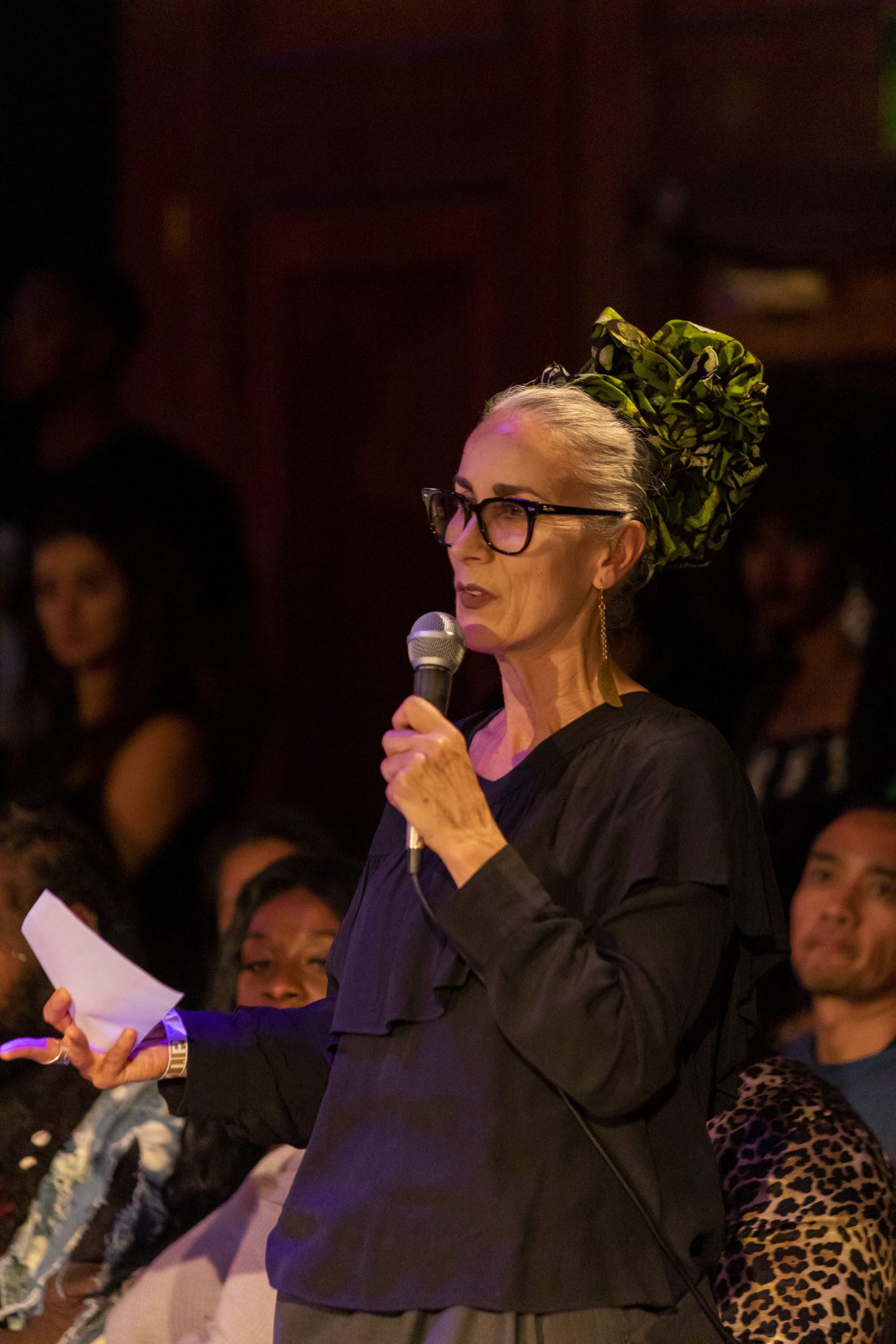
Annaliese Dayes, of America’s Next Top Model hosted the event and welcomed guest speaker, Caryn Franklin MBE, who congratulated Diana Dahlia on being ‘a visionary, a thinker and a great leader’ followed by a vibrant parade of exquisite fashion.
Spectacular collections displaying culture and style, with hair by Design Essentials and Josh Hair & Beauty, were unveiled. Makeup was provided by Geraldo Frazao and Natalia Dacrie, using Pat McGrath Labs.
José Hendo was the first to captivate the audience with a trans-seasonal PAST PRESENT FUTURE Design Series, a sustainable haute couture collection inspired by the River Nile. José paid homage to her rich cultural heritage by using traditional Ugandan bark wood alongside other sustainable textiles to promote ‘ eco-sustainable circular design’.
Next up was Urban brand, Mercier, with their effortlessly cool AW23 streetwear collection; followed by House of YGA, who impressed guests with an eclectic blend of Afro fashion and Old Hollywood Glamour.
The show’s finalé ended with a stunning collection from the African King of Couture himself, Adebayo Jones. Rich materials and exquisite details set apart Adebayo’s aptly named ‘Luxuriance’ collection. It was a vision of African opulence, leaving lasting images with the attendees long after the catwalk lights dimmed.
All agreed that the ‘ All Things Fashion – The Fashionista Event’ was a huge stepping stone that is paving the way towards accessible and inclusive fashion.
Adebayo Jones endorsed the sentiment with glowing praise of ‘the dynamic duo: Diana Dahlia and Steven Jervis’ for providing a ‘not only thrilling, but fabulously rewarding and fulfilling experience’.
Diana Dahlia, Steven Jervis and their team have succeeded in igniting industry change. They promise that the road will not end there.
For more information visit: www.dianadahliapr.com
]]>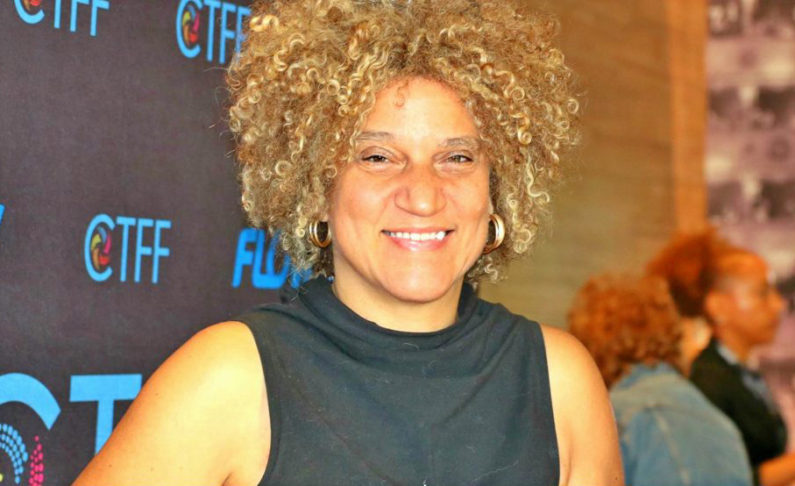
Reading Frances-Anne Solomon’s bio, one is struck by how many ‘firsts’ she has achieved. First Woman of Colour appointed to BBC Radio 4 Radio Drama Team. One of the first handful of Black Women to sit on the directors’ panel of judges for both the OSCARS and BAFTA. A Co Founder of the UK Windrush Caribbean Film Festival and Founder of her own Media/Drama production company.
In this frank account of her life’s story, Frances-Anne Solomon records the memories she holds of those breakthrough moments.
Looking back on my career now, it was hard, hard work! I was full of outrage at what I was seeing. I was motivated by a vision of how it should be in the TV and media industry. So, at the time, I did not feel like I was doing anything new. I felt more like I was fixing what was unjust.
Growing up as a child in Trinidad, I had the experience of being in the majority and being from a family with incredible Black men and women, in leadership roles in my country. Both my grandfathers were “firsts” on the island as Black Island scholars and doctors. They cut the path before me. I grew up knowing about them and their legacy.
Going to England – or even when I came to Canada – it was so off, so outrageous and stupid that there was so much inequality. It was just wrong – that was not how I grew up seeing the world.
Twenty plus years ago, being the first, I thought we were going to get this over with and address, fix it and move on. Never in a million years did I ever conceive that 25 years later, we would still be starting from scratch. It is sad, ridiculous, outrageous and tragic.
Grappling with Issues at the BBC Then and Now
When I arrived at the BBC I started in radio. At that time my department was 90-95% men and there were no People of Colour. There were no People of Colour in any capacity in the organization. Everybody was white, Oxbridge graduates and there was no consciousness. I was hired because they were looking to hire a Person of Colour and I was acceptable – a young, light-skinned, highly educated woman who seemed pretty and amenable. I think that was the bottom line.
The issues of racism, inequality, lack of diversity, inclusion and representation were so dominant. Being a ‘diversity hire’ who was good at what I did and not being intimidated by class or colour, I set out to fix what was wrong. My biggest motivation was to get other People of Colour on the same level as me – creating opportunities for others so that I would not be alone.
There were no writers of Colour at the BBC at the time. I worked to get this rectified. I was able to get them to create programmes to hire writers. Dozens of writers were hired as a direct result of these initiatives. They were very open to my suggestions and what I was saying. In terms of actors, there was a pool of actors (an actors repertory) who were available for productions. We brought on four of these individuals. We took giant steps in radio. The truth be told, at the time, I was very young and I had no fear.
Coming from Trinidad and a society where we were not the minority and not powerless, I had no experience of dealing with discrimination. I did not consider or realize the magnitude of what I was taking on beyond the need to see change. I wanted work that reflected our perspectives, I worked with management and HR to come up with programmes to hire People of Colour so we could produce material that reflected our experiences, told in our voices and from our perspectives. We did Peggy Su! and had a slate of other movies by writers of Colour ready to flood the airwaves. But it was one of the hardest periods of my life filled with constant battles.
Facing Progress and Roadblocks
Within that first year I was at the BBC, we hired 2 producers of Colour, one Black and one South Asian. So, from no People of Colour to dozens in different roles within one year! It was absolutely intense.
By the time I got into television I had been beaten about quite a bit.I had begun to pull back. My boss approached me and he said, “why aren’t you doing what you did at the radio?” He said I will give you the funds to produce five feature length films by writers and directors of Colour with a budget to create a series of shorts.
So again, we began the process of looking for writers, commissioning writers, developing scripts for shorts and for features. We found crews of Colour, brought in directors, producers and production companies led and owned by People of Colour.
When we put out a call for writers, we got 600 applications. Having gone through this in radio, I knew this would happen when you open the door. Even though there was a lot of talent, they had zero experience with writing full length or short screenplays. There was a huge element of training which was both time consuming and very energy intensive.
The biggest issues came when we were ready to go into production. I had carte blanche to hire and train who I wanted, but the BBC infrastructure was hugely problematic. They did not want to hire People of Colour and the union was basically the tool used to strengthen that agenda and keep People of Colour out.
We were not allowed to hire anyone that was not a member of the union and there were really no People of Colour in the unions at that time. We were told we can’t put money into the hands of people who are not tested by the BBC so they would not hire Black producers.
At each of these roadblocks I would devise ways to circumvent them. I created a bunch of jobs for Black producers as trainees to come into the system. They countered by giving jobs to the old boys above them. This was an ongoing battle. So, after hitting roadblocks. I would go back to my boss to get me through another section of the hurdle and I be on my own again.
Eventually I took the route of doing the films as independent productions, giving the money to independent Black production companies. Then it was a matter of, we can’t give money to companies who have no track record. So, here we are with the money and the ability but there were constant blockades.
The final straw was when the outside production companies were forced to hire white “proven” producers if they wanted to get the money to do the productions. The huge opportunity, and the very reason why we were doing what we were doing, just disappeared. It was heartbreaking and one of the hardest things I’ve ever had to do. (As a result of this situation, it impacted a lot of relationships.) Truly, and now in hindsight quite naively, I thought once this was done, we would have conquered racism. There would be all these People of Colour in the industry who were in a position to have careers and move the industry forward.
I knew there was no progress in television because it is a juggernaut of big budgets. I realized it would take a lot more than me to change that structure because it is so driven by money.
I really thought that the changes we made in radio drama were lasting. Yet, when I went back to England a couple years ago I saw and spoke with a producer in radio and asked, “So who’s on radio now?” and she said there are no People of Colour in the radio department – no producers, no writers. Nothing.
With the social climate after the George Floyd murder, Black Lives Matter (BLM) and Me Too, we are back were we were, when I was working there, It makes me very very sad and frankly, quite sick.

Inspiration and critical acclaim for the film HERO in 2019.
The film began as a personal project at the request of my mother and her friend. This amazing man from Trinidad – Ulric Cross – who served in the Second World War and was the most decorated West Indian, was my parent’s contemporary and a friend of the family. My mother got it into her head, along with another friend of hers, that they wanted to see a film made about him. Being the filmmaker in the family, they asked me.
Initially I was very resistant because it takes so much to make a film. But the more I researched, the more I felt that this was a film I needed to make. Not only did this resonate with my background, with my grandfather also being one of the architects of Trinidad independence, it resonated because of the way the African diaspora is connected and the way in which our stories merge.
We started by speaking about firsts, and here we have a group of people who were absolutely firsts. Not many know the role that Caribbean intellectuals and professionals played in the African Independence Movement. This gentleman played an integral one. After the war Mr. Ulric Cross went to Africa and served across the independent African countries as a lawyer, judge and in various other capacities. He got caught up in the movement of history, in that transformative period when the “empire” was coming to an end. I thought this was really inspiring and an incredible story that everyone, and most especially our people, need to know.
Returning to Canada to Set up a Production and Distribution Company
I was really very shocked to find the climate the way it was. I had this fantasy, when I was in England, of Canada being this multicultural haven where opportunities abounded and our voices and perspectives would be welcomed. I went to university there, the University of Toronto, but was shocked when I discovered that Canada was so much further behind the UK at that time.
Opportunities and Challenges of launching The Windrush Caribbean Film Festival,
The opportunity to create the festival was amazing.
Two years ago through a series of event screenings from Scotland to Brighton and across London, we distributed my film Hero across the UK and discovered that there is a huge audience for a film that spoke about the Windrush generation. This discovery is what led to the festival. We wanted to bring different kinds of films to this audience.
Our challenges included funding, as is with the majority of start-ups, and then there was Covid-19, which presented us with amazing opportunities. That first year we had zero funding for the festival and Covid was a reality, so we had the opportunity to create a virtual festival at a lower cost than in-person. We were able to use the CaribbeanTales TV VOD platform to help deliver the festival virtually in the UK. The second year, with that experience, we were able to raise funding.
The biggest challenge by far was having a team in England and one in Canada working together. It meant both communities had to imagine themselves as one global team. What I found interesting is that this was not an experience a lot of our people had; this ability to think and work as part of a global whole. It has been exciting.
Supporting Caribbean film makers through The Windrush Festival
Shockingly, there is right now no fixed Caribbean film festival in the UK. I think this is really a gift. Caribbean film makers, I believe, have a desire to be part of a film festival where we can tell our stories and narratives. The festival allows, fosters and encourages this. It’s very exciting. We have seen a growth in year 1 to year 2, There is this excitement in England that we have something of our own.
Connecting with the younger generation of film makers
I am in awe of generation GenZ…who do not hold back. I love them all…they are fearless! They love to not be the only person who opens her mouth and pays the price. For 25 years, I have been the one opening my mouth and paying the price… I think my advice has changed a bit. It is now, go brave and build on what you have been provided. Live your full life and don’t waste any time.
A snapshot of Frances-Anne Solomon’s filmography
Peggy Su! (BBC Films, 1997); What My Mother Told Me (Channel 4 1995); Bideshi (British Film Institute 1994); Literature Alive (Bravo!/OMNI, 2006), Reunion (BBC,1993), I Is A Long Memoried Woman (Arts Council of England 1991). The film HERO.
For more information about Frances-Anne Solomon: mailto:[email protected]
]]>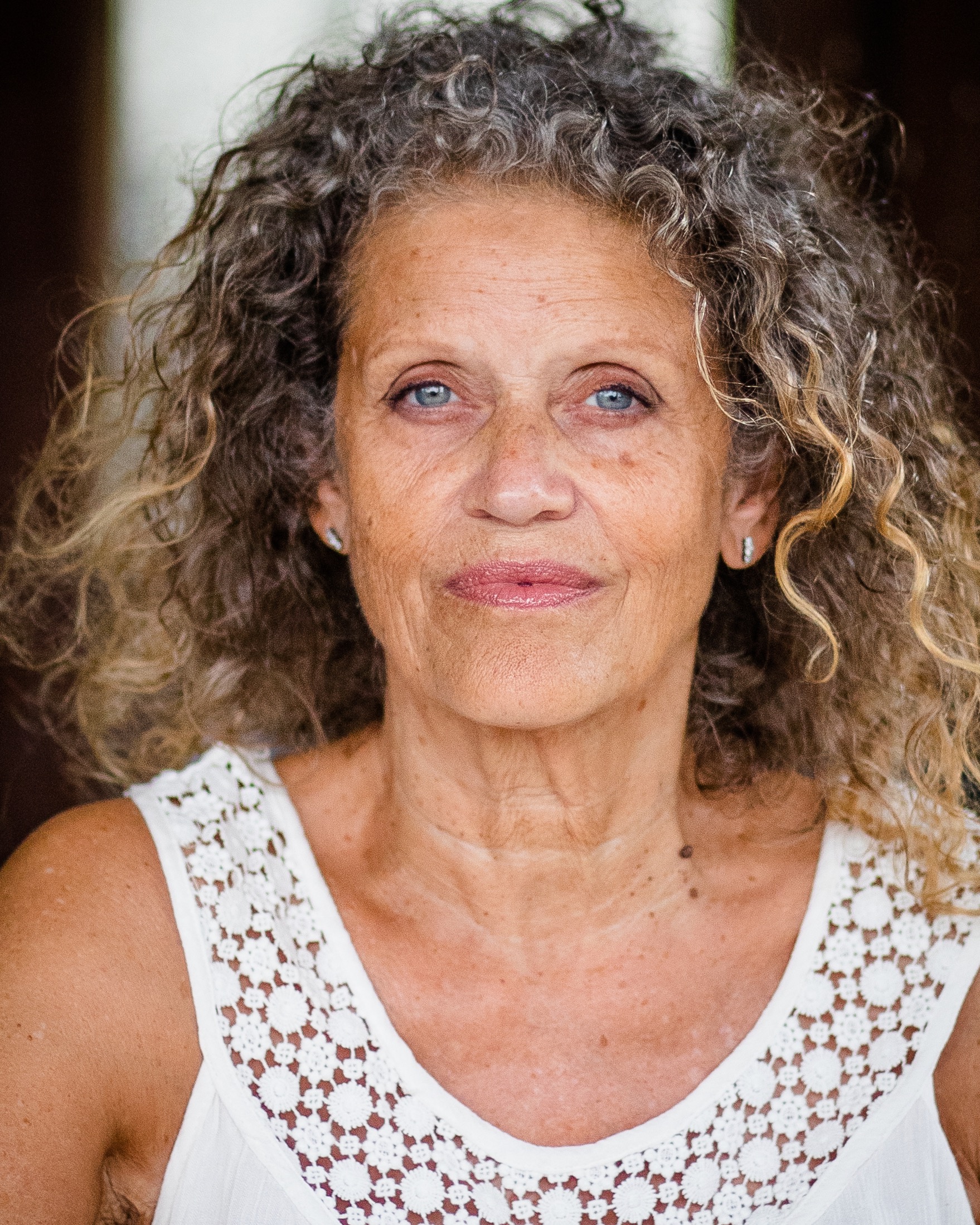
Creativity, inventiveness and longevity are just some of the nouns that describe Judy Hepburn’s career. Having started as an actor, working in the West End and on international and national tours, Judy kept pushing the boundaries to include directing, writing for theatre and radio. Now an established author, Judy lets us peek at her latest book projects, starting with her publication on the life of the historical figure, Ignatius Sancho.
I was asked to write about the life of Ignatius Sancho for Scholastic’s series called ‘My Story.’ Instead of just writing about his story I had to write from his own point of view, which threw up a few challenges!
For those who are not familiar with Sancho’s story, why was he such an important figure? What challenges did you face writing from his perspective?
Ignatius Sancho left us something rare and precious – his voice. As a Black man living in England nearly three hundred years ago, he wrote to newspapers about things he cared about, such as ending the slave trade. He also wrote personal letters to his friends, meant just for them, so we know the letters are a true reflection of how he really felt. When some of these letters were collected and published after his death, the book sold out immediately. He became the first Black man to vote in parliamentary elections.
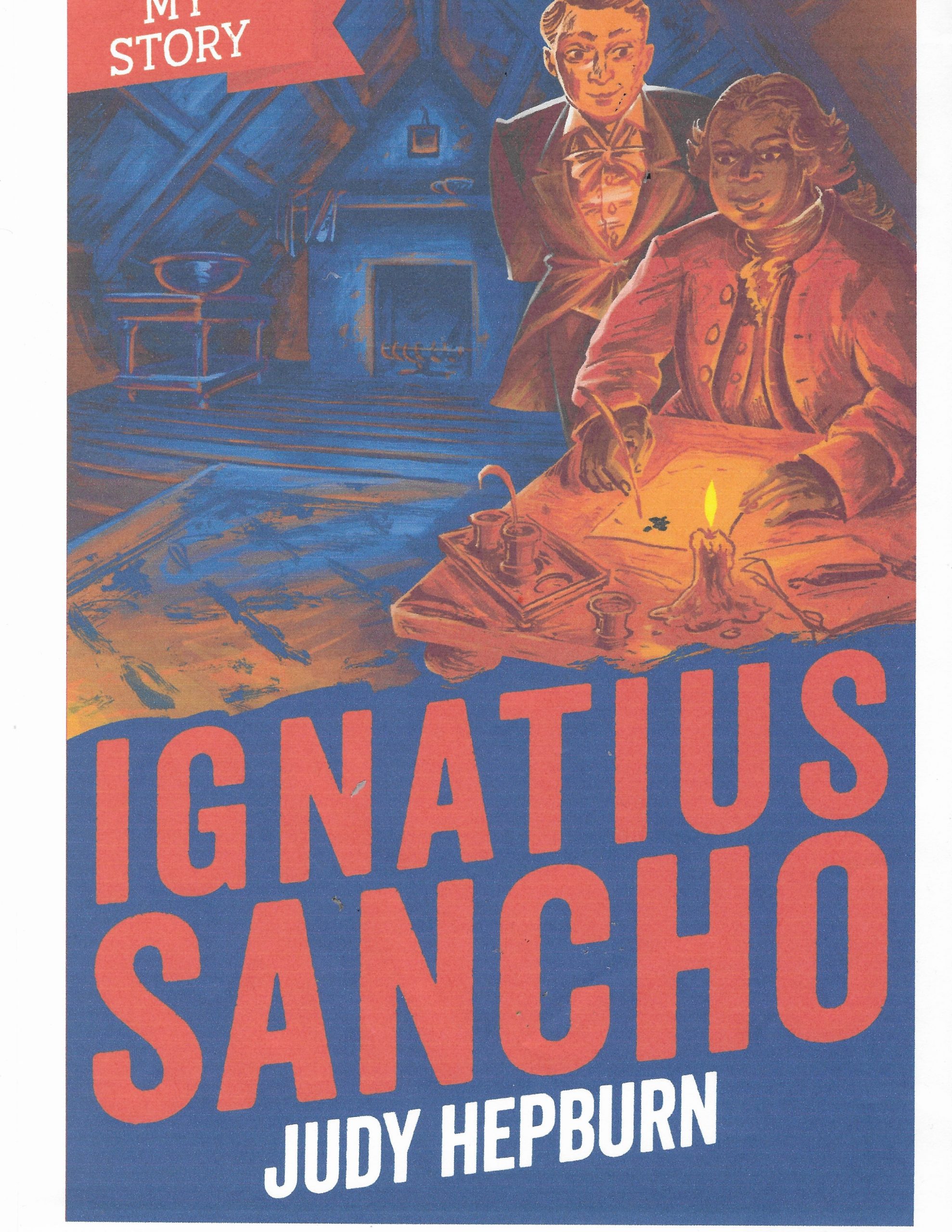
Writing from his perspective was definitely challenging – because it is such an assumption to think that I can. I just had to acknowledge that this is my version of him. I wrote the book during covid lockdowns and he was a great companion. I read his letters and what we know about his life. The other consideration was that this is a children’s book. I so want them to know and admire the man, Ignatius Sancho; how he overcame the obstacles in his life and made a good life for himself and his family.
Who are the other authors in the ‘My Story’ series? Which figures will they shed light on?
Another author in the My Story series is Sufiya Ahmed who wrote about the Second World War spy Noor-un-Nissa Inayat Khan.
What about your other project on the Windrush generation? Is there a particular figure from the Windrush era you wish to write about or admire?
I’d love to write about another character. There must be quite a few heroes from the Windrush generation, such as Kathleen Warsame. She was taken from Ethiopia as a child, to work in Yorkshire as a labourer. She later moved to London and worked as an extra in film studios, and ran a Black seaman’s mission in Stepney. I heard her testimony from the Black Cultural Archives and was very moved.
Who else collaborated on the Windrush anthology?
Are the series of books for schools a part of a wider call to expand the curriculum on British history? Who will have access to the publications?
I wish I knew the answer to that! Your suggestion is a great idea. The books are available to the general public to buy, and Scholastic has a good relationship with schools.
You have a varied career and have worked in so many different fields from theatre, writing, directing and so much more. Tell us briefly about your career journey to this point and how you got involved in the project. What have been the highlights?
It feels weird to write about myself! I began as an actor because that’s one of the more visible roles in the arts world I suppose. While working in the West End, touring internationally and nationally, I put my hand to whatever was required in the small, but revolutionary, Carib Theatre Company. This led me to writing theatre-in-education plays. A highlight was being invited to Dar-es-Salaam to work with Tanzanian theatre practitioners to develop theatre-in-education there. Co-writing Sitting in Limbo, which has seen productions in London, Jamaica and Toronto as well as the BBC World Service, has led to writing children’s books. (I’m still open to playing ‘third bunny on the right’ though!)
The last 18 months have been difficult, particularly those in the performance arts. With your experience what useful information would you pass onto young people at the start of their careers?
Collaborate with your peers. Be curious about many things. Try not to worry about where you’re going. Practise your craft so you are as good as you can be.
Do you have any other projects in the pipeline you can share with us?
I am very excited to be in the middle of redrafting my first novel, working title ‘The Dripstone.’
Please let us know how we can purchase your publication ‘I Was There’ and other books.
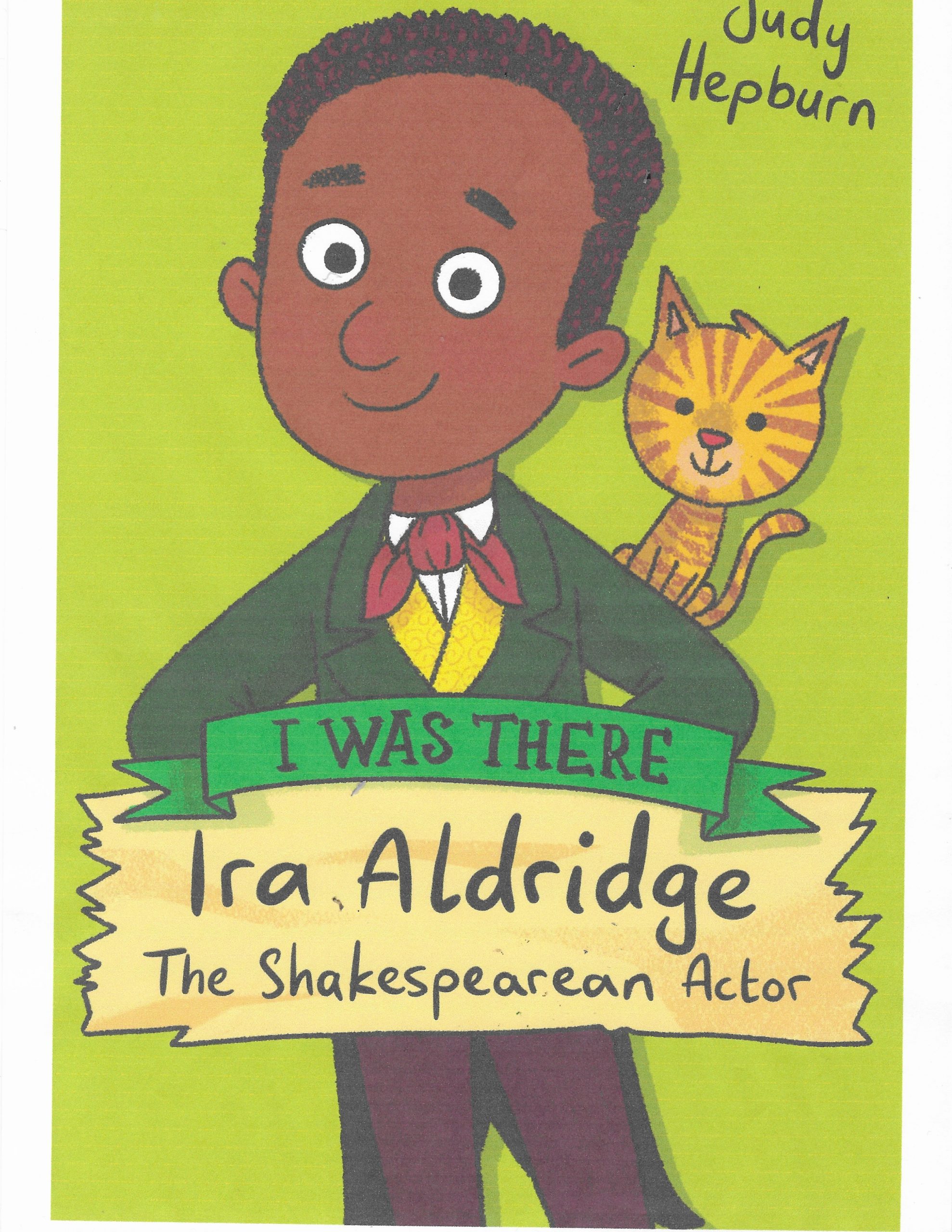
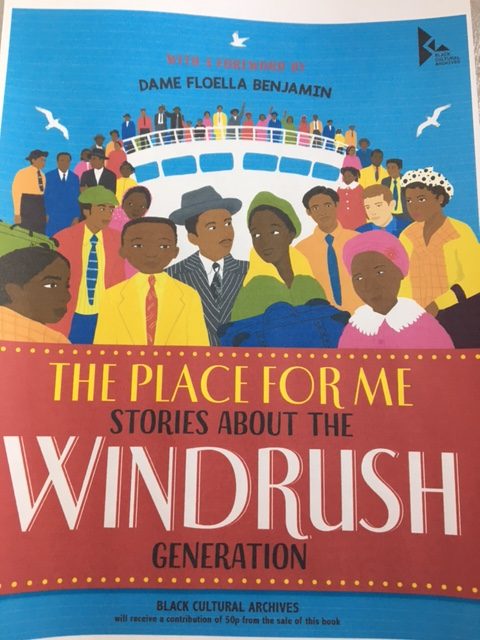
The quickest way to get ‘I Was There Ira Aldridge’, ‘My Story Ignatius Sancho’ and ‘The Place For Me, Stories about the Windrush Generation’ books is through Amazon. AmazonSmile gives some of the book price to a charity on their list.‘This is Book Love’ is run by Samantha Williams: https://www.thisisbooklove.com/ and you can order on her website and also Waterstones online ; https://www.waterstones.com/
]]>

AMANDA HOLIDAY Artist & filmmaker Amanda Holiday was born in Sierra Leone and came to live in the UK at the age of five. She completed a degree in Fine Art at Wimbledon School of Art before moving into film and scriptwriting – directing a number of short experimental films for the Arts Council, BFI and Channel 4. Between 2001-10 she lived in Cape Town where she wrote and directed several educational TV series.
Since returning to live in the UK in 2010, she has exhibited in various venues. She continues to develop film projects as well as promote artwork through Art FUNK – translating statement artworks into sought-after home-ware items.
In this interview, you will learn:
- What exactly a creative polymath is
- If we need to embrace everything, and much more!
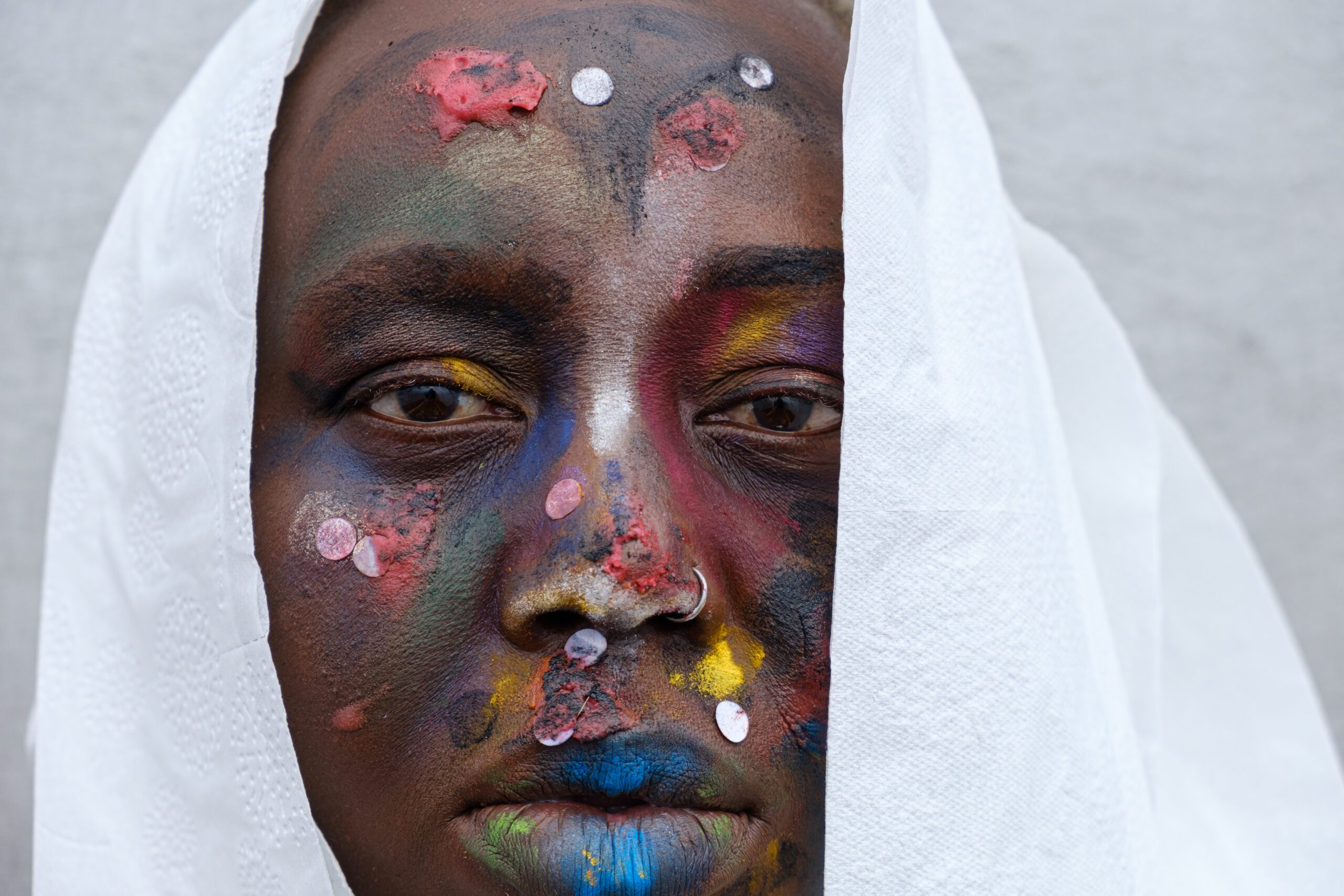
The Covid 19 storm has hit society in many different ways. Some communities have experienced greater tidal waves than others. Fadzai Mwakutuya, a Zimbabwean artist living in the Scottish Highlands in the UK, gives her perspective of the Covid tempest. Despite the pandemic, she found ways to reach out to new audiences, invigorating her resolve to use her art to educate.
The conversation begins with Fadzai’s reflection on her work on nature and the environment and it’s ability to bring a sense of peace to disparate communities.
Glad you find my work interesting and calming, though most of it speaks to quite profound meanings, generally my response to events unfolding around me.
I use nature in my art process, for example pressed flowers, natural pigments. The environment is a recurring theme in my recent artwork. I’ve also done collaborations on Climate Change. I’m hosting a website exploring the subject; My Climate Change Creative project, is part of my artist in residence work with Repository of the Undercommons (RotU), an art collective in Scotland with a sharp focus on degrowth & decolonisation.
You describe the Scottish Highlands as your adoptive home. Tell us about the environment and the community in which you live.
Moving to the Scottish Highlands, a semi rural environment was a relief from the busy, city life of Edinburgh. I now live on a peninsula in the Scottish Highlands. I’m learning about using off-grid sustainable energy. The scenery is stunning and the environment very rural, similar to my home village in Zimbabwe, Chimanimani. I have had to slow down and learn the ways of living in the Highlands. The peaceful solitude gives me time to focus on my career as an artist.

Zimbabwe is well known for its artistic tradition in music, theatre and the visual arts. Growing up in the country did you always know you wanted to be an artist?
Yes, from a young age. I was always complimented on my drawings at school. Later I developed my talent studying Fine Art. I was always the quirky dresser of the family, preferring to have a creative eclectic wardrobe.
What elements of Zimbabwean culture do you bring to your art?
Politics, landscape, social justice, intersectional issues, colour, texture, spirituality, humour laughter, layers of delicate recycled materials, collage, light humour with banter, conversation and jokes which highlight a solid foundation.
One of your themes is to use art to tackle mental health and well being. What projects have you undertaken to achieve this?
I’ve been involved, over the years with the annual Scottish Mental Health Arts and Film Festival, (SMHAFF). I’ve shown work with an exhibition called ‘Out of Sight Out of Mind’ (OOSOOM). Now in its eighth year, I really enjoyed learning and training with CAPS, the independent advocacy organisation focusing on mental health in East Lothian and Midlothian in Scotland and the organiser of the OOSOOM exhibitions. During the period, I tapped into loads of networking opportunities. I was able to identify and run workshops with various partner organisations. I delivered bespoke workshops such as a drawing activity for women from the Black, Asian and Minority Ethnic (BAME) communities to highlight the stigma of mental health.
As Executive member of a Scottish creative union, I’ve learnt and supported others during the pandemic by joining the Covid subgroup. We connected with members and mapped and signposted routes to funding opportunities and relevant campaigns while providing solidarity to professional artists living in Scotland.
I’m currently exploring how art can support training on equality and diversity issues. The main ethos of my work is underpinned by the issue of mental health and well being. This year’s advocacy focused on a collaboration called ‘Serenitude’, a short film on ‘breathing’ in solidarity with Black Lives Matter. It was also a response to my heightened fear of Covid as a keyworker in other jobs.
Other themes I’ve explored in relation to the mental health festival include research into Zimbabwean psychiatry, especially looking at traditional, natural medicines vs or (in tandem) with Western pharmaceutical drugs. I sketched an idea for this project in a piece called Afrocea’s Complex Quest.
The project led to a conversation with Dr Dixon Chibanda, one of the few psychiatrists in Zimbabwe, to work on a collaborative piece to highlight his Friendship Bench Project to support mental wellbeing in Zimbabwe.
You also advocate for marginalised communities. Which groups have you worked with? In what ways have you drawn them into the mainstream?
Exclusion drew me into the arts. I discovered that the missing groups in the UK Arts scene, were immigrant, Black artists working professionally. Especially older women like me. Frustrated and determined at the same time, I followed my strengths and began networking in the exclusively, white art groups. I wanted to validate and legitimise my professionalism so I launched and registered the arts business and consultancy, Afro Art Lab. The most exciting experience in community engagement was making art during the Edinburgh Festival for a project campaigning against austerity!
With Afro Art Lab, I aim to promote collaborations and assist in cross cultural creative work, mainly between Zimbabwe and Scotland. The objective is to connect, curate and showcase a travelling exhibition between the two countries and tackle the stigma of mental health, whether at home or in diaspora communities.
In this vein, my creative process involves research on art projects encouraging the discussions and collaborations on the practice of mental health therapy. My installation, ‘Ode to Grenfell’ was shown at the OOSOOM, Mental Health exhibition in Scotland.
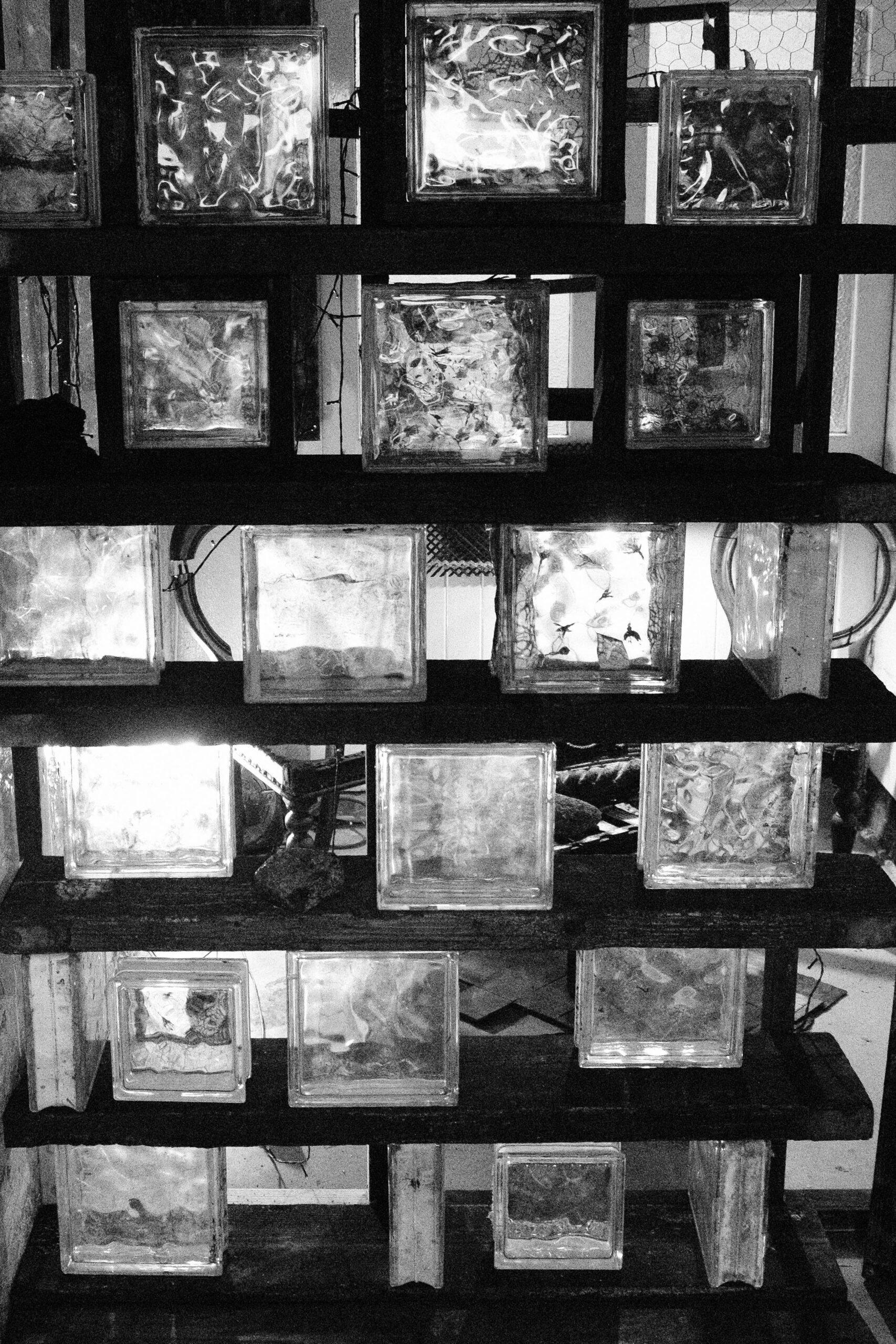
Subsequently, I was invited to a Black History Event at the House of Commons in 2018 and met the Uncle of Kadija Sayes, a young, promising artist who perished in the Grenfell fire. I told him about my artwork dedicated to his niece. One day, I’d love to install this piece at the House of Commons, for it to speak to the parliamentarians.
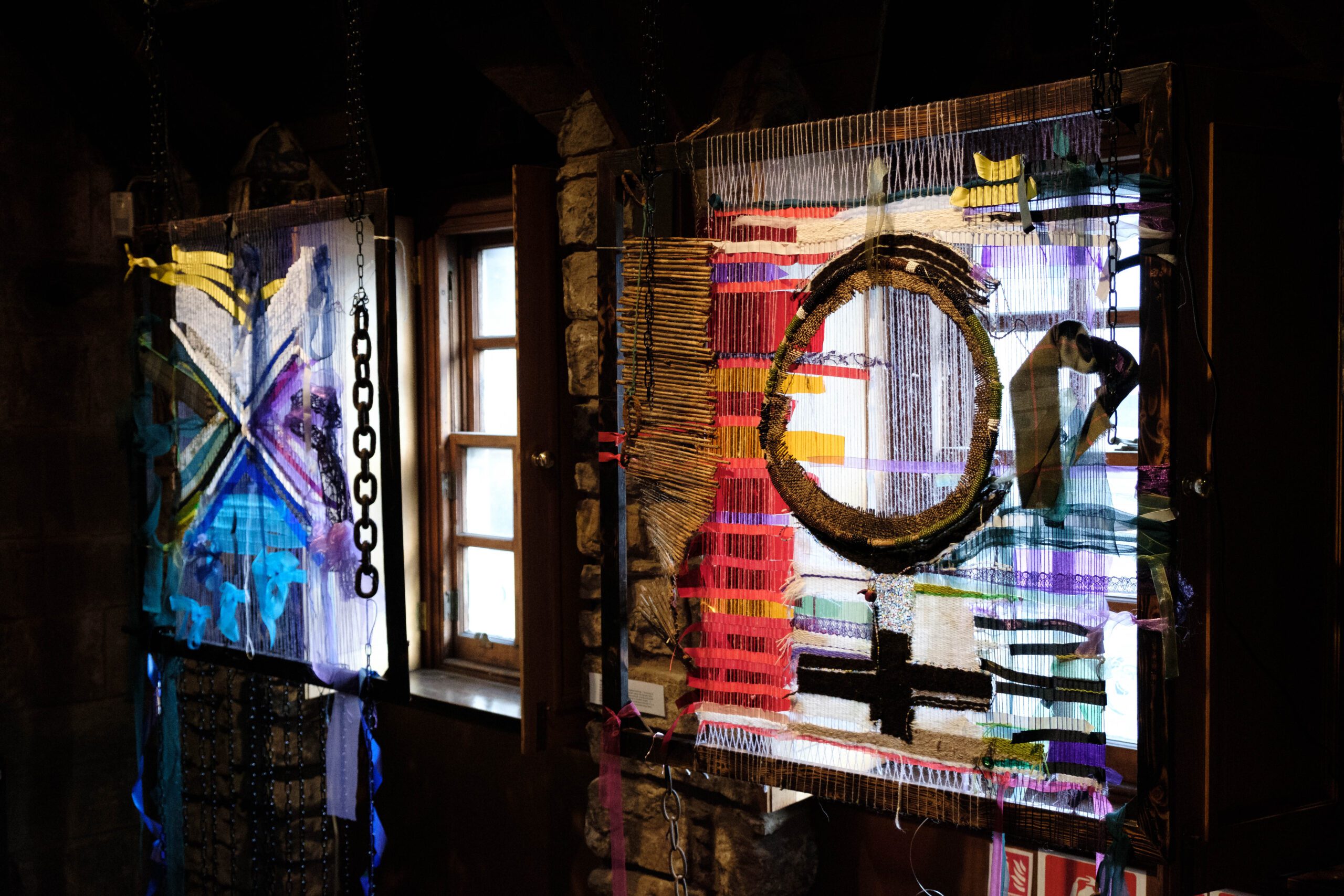
Recently I’ve managed to meet and talk about my work globally, using the online platforms we’ve all had to adopt in 2020. I work with varied groups with intersectional barriers, encouraging accessibility of content. For example, the question of language barriers, data poverty in Africa and digital exclusion here in the UK are currently on my radar.
This year, I immersed myself in collective activism by being visible in climate change action projects in solidarity with environmental justice contributions to ‘The 2021 United Nations Climate Change Conference’, also known as ‘COP26’. It is scheduled to be held in Glasgow, Scotland from 1st – 12th November 2021, under the presidency of the United Kingdom. I have found visual language to be more inclusive in connecting with global audiences. See my project on Climate Change Creative; https://www.youtube.com/watch?v=k3cO-AZxxuc&t=3091
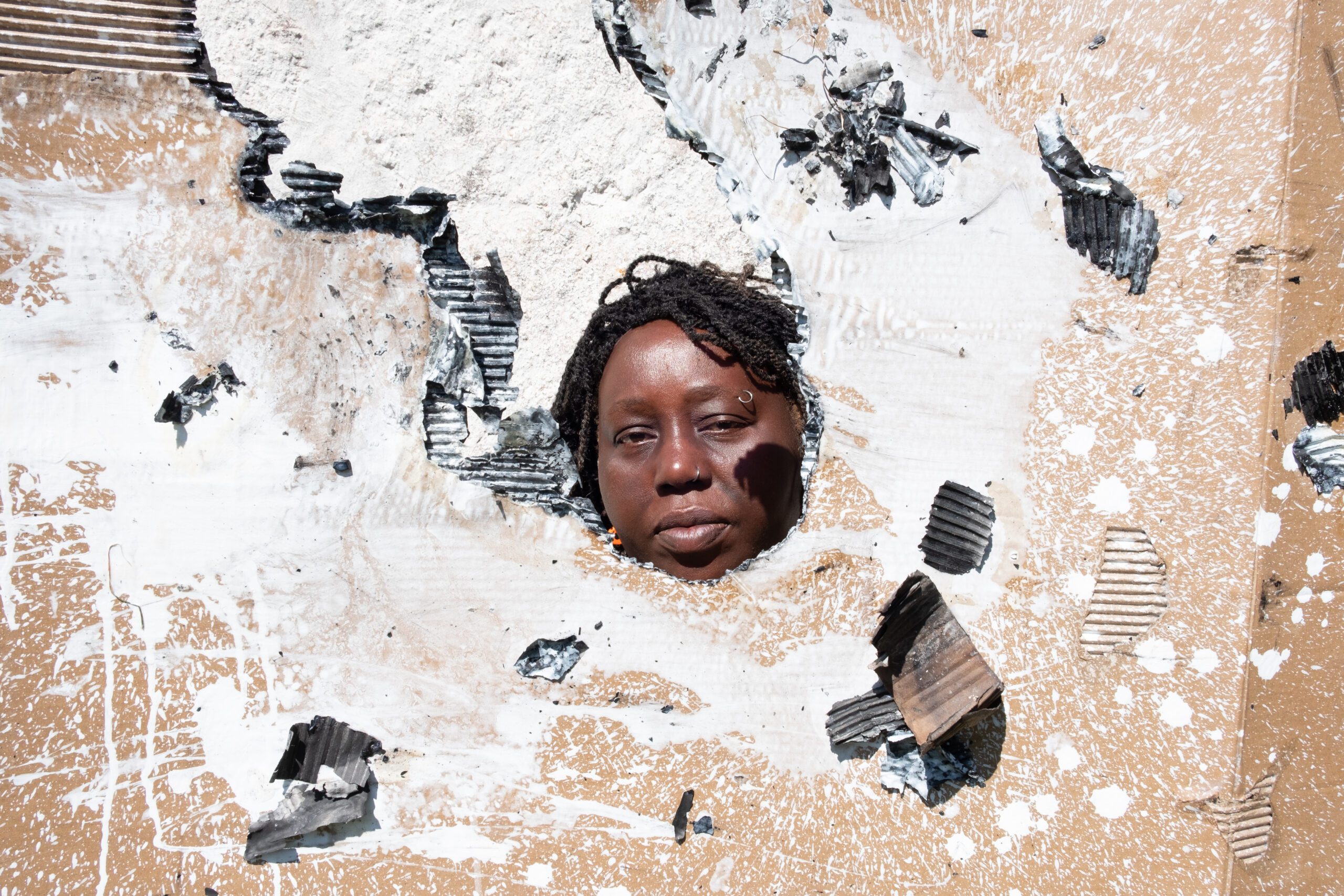
How has lockdown been for you, both personally and from the Scottish perspective?
The Scottish Highlands are quite isolated already. International tourism took a hit, so things were quieter for the self-employed artist. Covid restrictions impacted on artistic practices as the physical spaces to engage with the arts were locked down. I had to adapt to showcasing my exhibitions and campaigns to online platforms.
What have you learned from this year that you will apply to future projects or life in general?
In the 21st century, I shouldn’t be talking about Black Lives Matter in my artwork but I’ve had to. I’ve realised the immense gaps in opportunity for People of Colour in all areas. Unconscious bias has never been more stark. Intersectional inequalities have come to the forefront for me during this period. I suddenly feel overwhelmed by the creative work ahead to support people to heal from the onslaught of Covid, prejudice, politics, governance failures and basic personal relationships. I will definitely respond to this in my personal work. I can’t escape it. This is the emotional journey my work naturally takes. This year has made me think about solidarity, despite our differences. I’m looking forward to more collaborative approaches.
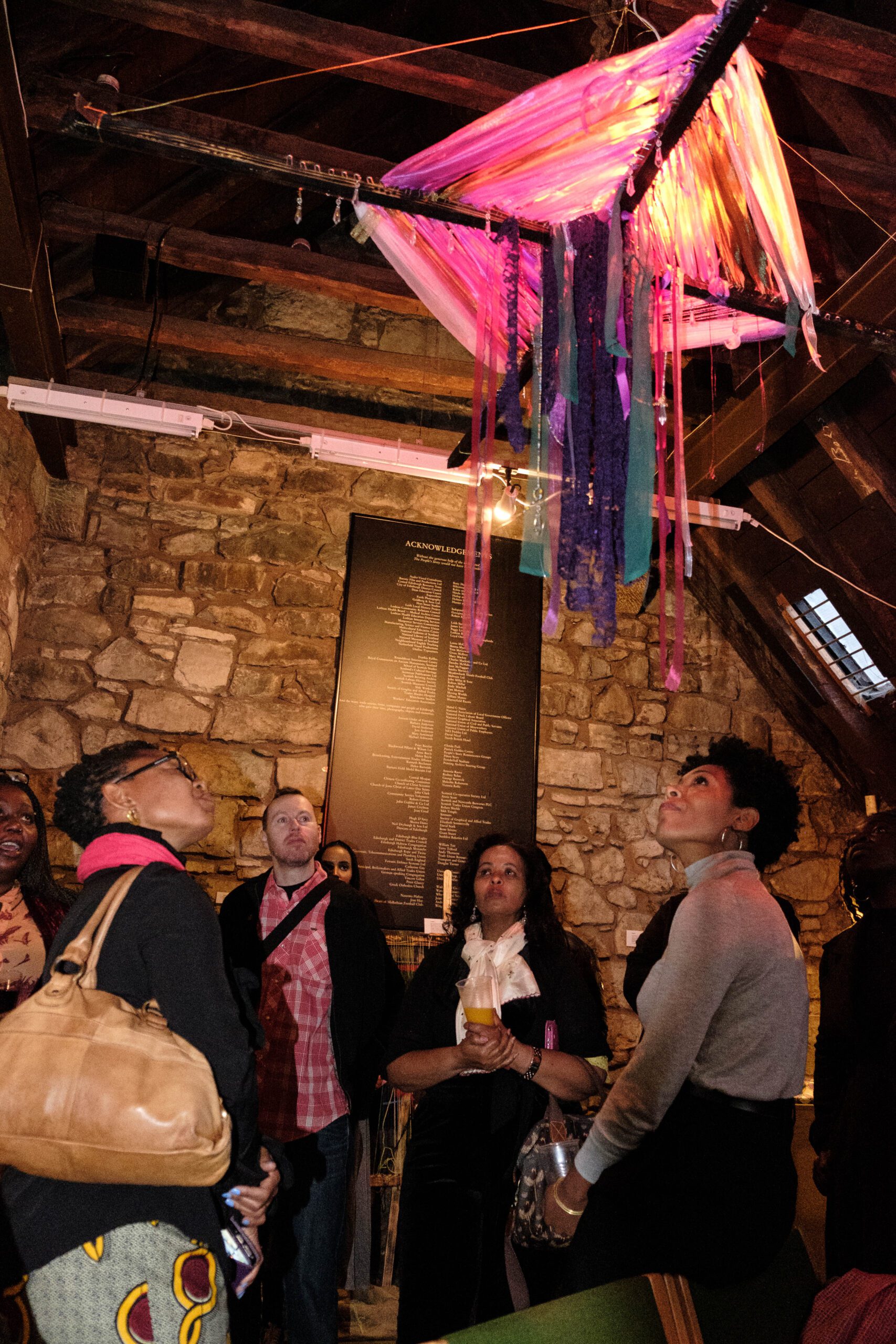
My goals are to reach out and deliver more cross cultural meetings online and expand networks. I see it as part and parcel of living as an artist. Art is work. I feel fortunate to have a flexible career that encourages networking and reaching out as part of self expression.
*The links below refer to further work on the Climate Change Creative;
https://www.youtube.com/watch?v=7eJx0Pomxy4
All photography by Ewan Bush.
For more about Fadzai Mwakutuya and her artwork, visit her website:https://fadzaimwakutuya.co.uk/
]]>
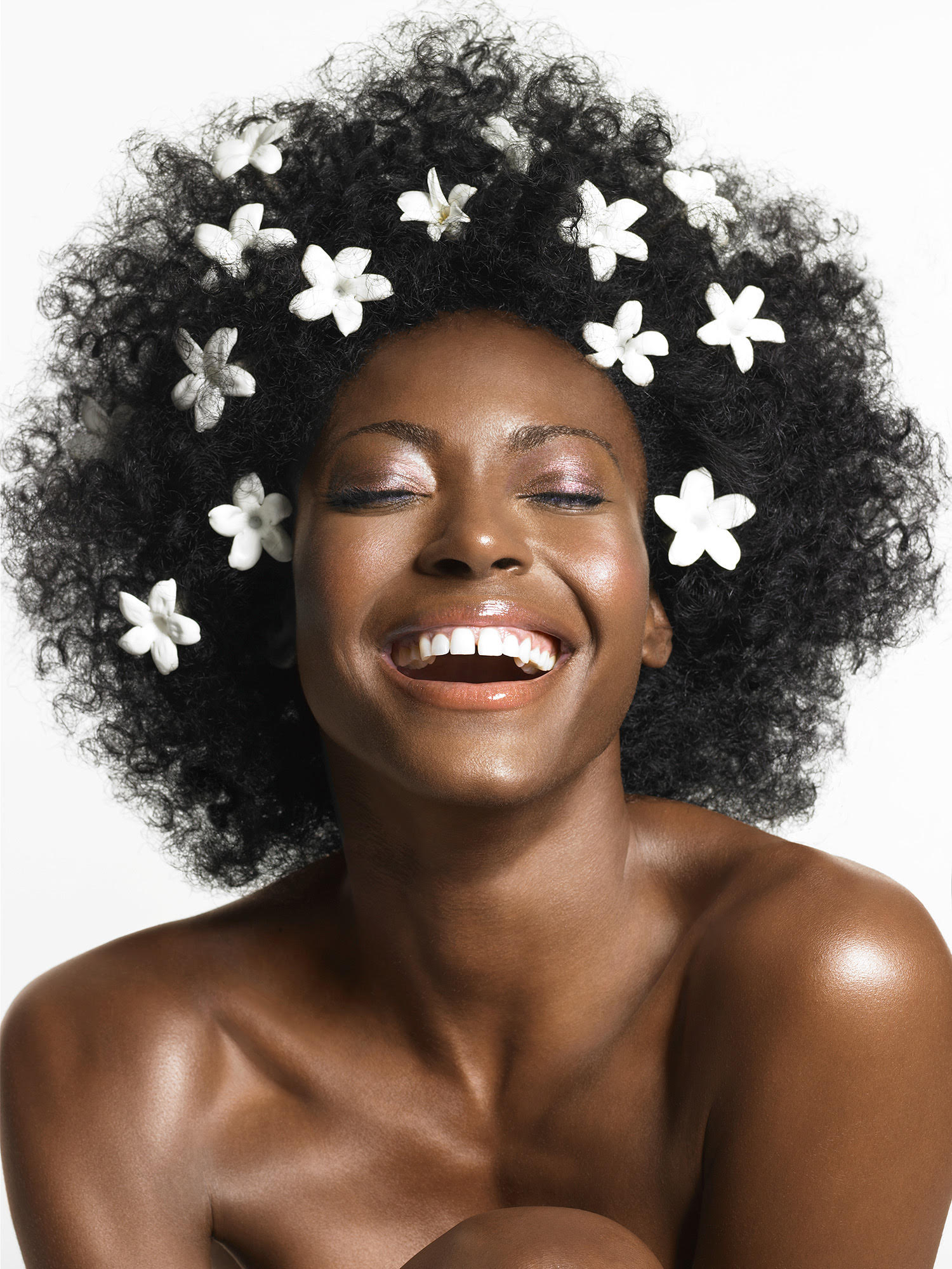
Princess Keisha Omilana has always stood out from the crowd. While walking down a street in her native US, she was spotted by Prince Adekunle Adebayo Omilana from Nigeria. He became her husband and immediately swept her away to a seemingly ‘fairy tale’ life with a ‘happily ever after’ ending.
But the tale belies years of determination and perseverance on the part of Princess Keisha. At a young age, she set her sights on becoming a top fashion model, designer, public speaker, educator and entrepreneur. With her message of self love and acceptance, Princess Keisha was ahead of the curve in the call for diversity and inclusion in the hair and beauty industry. A natural leader, Princess Keisha reveals in her own words, how she managed to inspire others while pursuing her dream and life passion.
The PANTENE Girl

I am most known as The Pantene Girl and the first Black model to hold a major hair and beauty campaign with my natural hair. I am a Model, Actor, Public Speaker, Natural and Mixed Race hair influencer. I am a wife to Nigerian royalty and a Mommy of two. Hence my team and I have coined the hashtag #TheWorkingPrincess on my @keishaomilana Instagram page.
I created A Crown Of Curls in 2017 as a way to give back to the community, create a much needed space for mixed race, natural, curly and tight textured hair. It’s a passion that I know will grow into one of my ultimate goals to create and launch the first and only hair salons for mixed race, curly textured hair all over the world (starting in London).
I’ve been a top fashion model for over 15 years. Fashion, hair, public speaking and mentoring our youth have always been major passions for me. After traveling the world for three years with my husband and two small children we relocated back to London.
Self LOVE equals HAIR love
I immediately saw the need for my message of Self LOVE equals HAIR love when I was constantly stopped on the streets in Chelsea and asked about my hair. Women and Mother’s wanted to speak to me for hours about their hair or their mixed raced children’s hair. Within two months I created A Crown Of Curls.
My work is rooted in self love, Black love, hair love, using the right language when referring to your hair and it’s many textures as well as loving the skin you are in. This message has become my brand. Though I have faced challenges, I believe the fashion and beauty industries are now being forced to get on board with what I have been advocating for fifteen plus years.
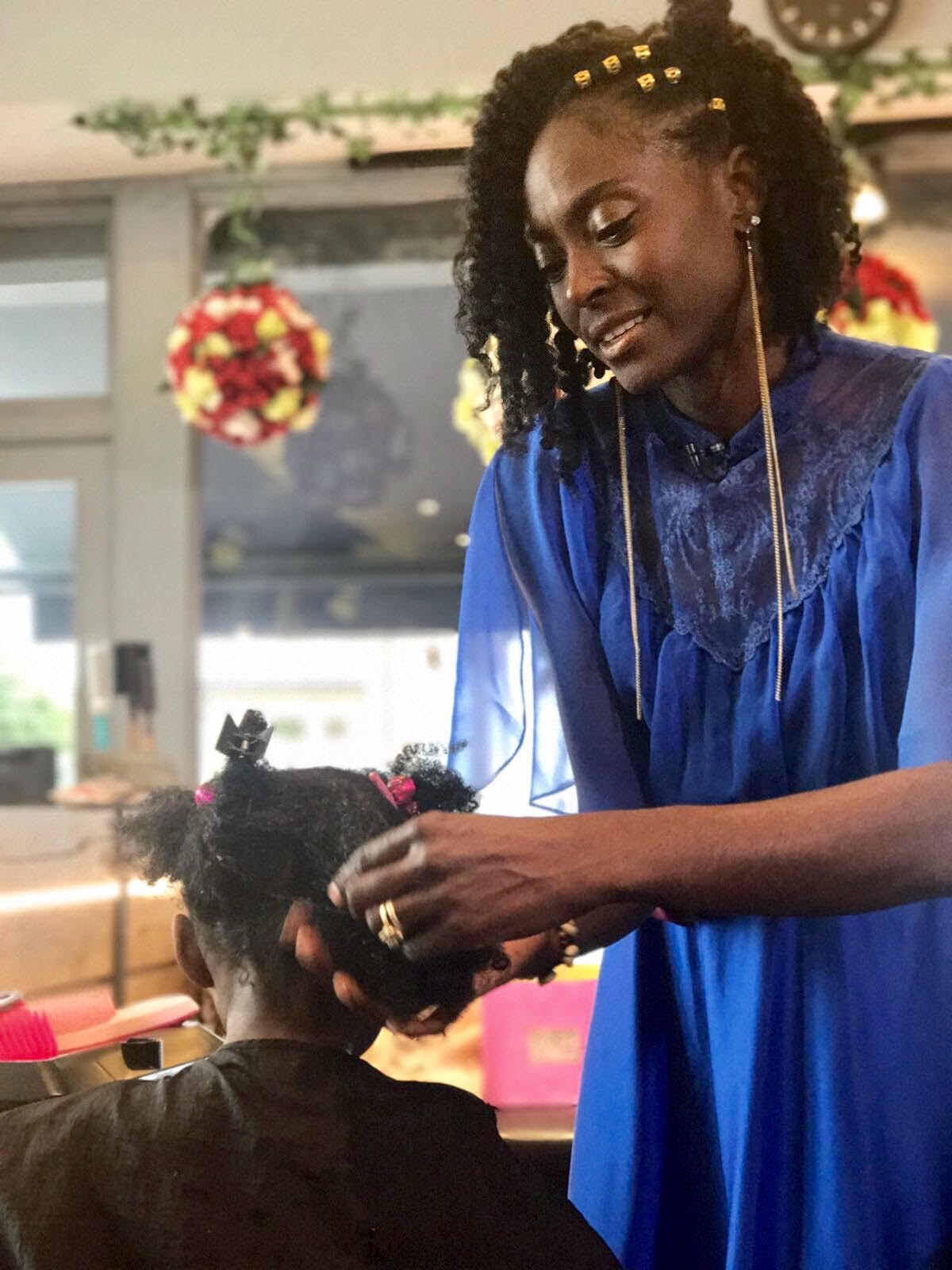
I’ve always had high self esteem and always known my worth. I can’t say that my acceptance of myself was reflected in my industry. As a Black model, I am constantly fighting for more diversity in fashion. As a result of the lack of diversity and the politics in fashion, I’ve had an extremely bumpy road in my industry. Not being able to get signed by an agent; not having a supportive booker once signed to an agency; having to prove my worth only to be labelled contrary to who I truly was. That’s just from modelling!
Creating A Crown Of Curls was much smoother. Though, there were many challenges. The main challenge was trying to grow a business in a foreign country where you only, truly know your family.
My advice for women and anyone reading this is to NEVER GIVE UP! Write out your six month game plan. Write out where you see yourself and your business in one year. Every morning think of what you are grateful for and do one thing that will bring you a step closer to your six month goal. Do one thing every week that gives you utter joy and laughter. Then surround yourself with supportive and positive people. You will get there.
YOU CAN do it!
A Crown Of Curls specialises in educating Mixed race clients on how to properly care for and love their curly, kinky, frizzy curls. I’m most proud of my self love equals hair love motto really resonating in the mixed race community.
There’s no greater joy than having parents hug and thank you saying, “Because of you and your ‘A Crown Of Curls’ workshops, my child LOVES their big curly hair. I’ve never witnessed this type of confidence and self love in her/ him before!”
What sets me apart from any and all natural hair service providers is my story, the history I’ve made in the fashion and hair beauty industry and mainly the fact that I have been a natural hair advocate and educator well before social media and the “natural hair movement” So my knowledge and experience with all types of curly hair is groundbreaking and unmatched. All of my clients leave our workshops and one to one sessions with confidence, self love, hair love, patience and the skills to maintain their curly beautiful hair.
VIRTUAL WORKSHOPS during Covid 19
To counter the effects of Covid 19 on my business as a fashion model and owner of A Crown Of Curls, we have created virtual workshops which have been very successful. We use all major video platforms such as FaceTime, FB Messenger, WhatsApp and Skype.
I personally am not ready to go to clients’ homes to conduct private one to one Hair Training Coaching Sessions. I’m pleased all of our clients have agreed to virtual workshops. I’m thrilled to say that both my and my daughters fashion shoots have started back again! We both shot a Christmas campaign together for Boden and have shot for ZARA, Milk Magazine, Reign and a Gerber commercial after lockdown was lifted. We are both so grateful and happy to be back on set.
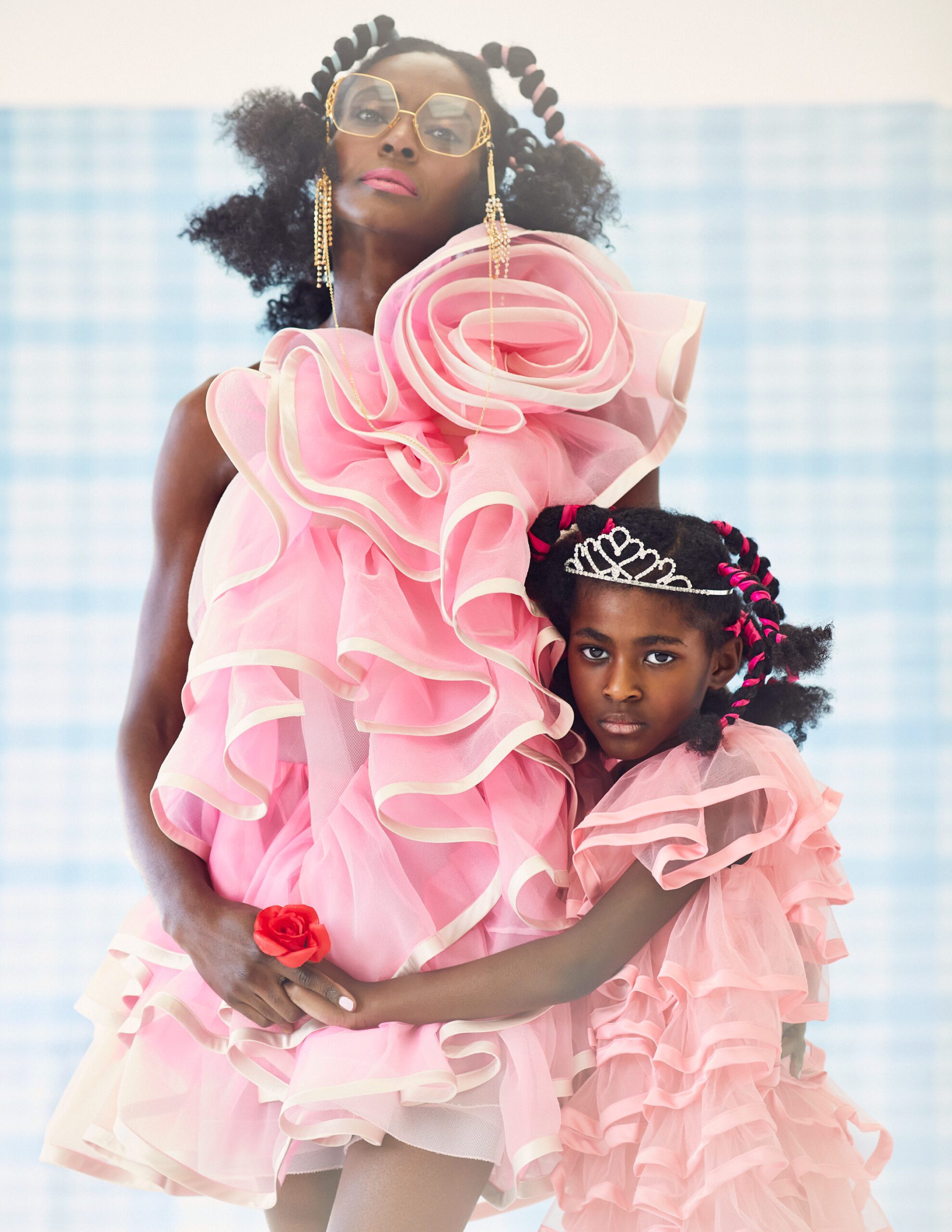
Though I’m married and have children, I have absolutely decided to keep working and earning my own living. I would never stop doing what I love and what sets my soul on fire. I always say that I LOVE receiving checks in the mail and in my bank account with my name on them. It’s important for every woman to always remain a lady and remain independent all the while being madly in love with their dream Prince.
Set your SOUL ON FIRE
The advice I give to all the young women who I meet and mentor is to stay in your lane, never give up and do the work. Trust God that your time will come. Never compare yourself to others, what they are doing or where they are at in their careers. Surround yourself with positive and encouraging people. Always do what sets your soul on fire. The moment you decide to let go and let God in, you will definitely attract your dream life and create and love your very own fairytale.
For more information contact:
They say necessity is the mother of invention. Two friends Rabi and Melissa adhered to that phrase and came up with a brainwave to solve the lack of quality baby products modern parents desired. Seeing a gap with what was on offer, they developed their own brand of environmentally friendly products under the catchy name ‘Baby Boo Boo’ launching only a small range to test the market initially. Rabi and Melissa are on their way to achieving online retail success as well as their mission to create a global community for parents.
What a wonderful concept you have created with the Baby Boo Boo Brand. Please explain the idea and what you mean by saying that your business goes beyond baby retailing?
The concept for Baby Boo Boo started on the premise of wanting to consider the customer experience and to be considerate of the journey of parents, in particular, first time parents. Many baby clothing brands focus on the products whereas we take more of a person-centred approach. We are not only providing our customers with products but targeted messaging through our Conscious Parenting Blog.
Eventually we would like to put on small events around London that focus on topics geared towards modern parenting and child rearing. When we say that our business goes beyond baby retailing it is because we are adding to and considering our customers’ journeys. What we envision for Baby Boo Boo is a lifestyle brand and a community where parents can engage, share advice with others and learn new things.
How long have you been in business and how did you come up with such an apt name?
We had first registered our company in July 2015 but it took us three years to plan and muster up the courage to take a leap of faith with our business. We spent a lot of time discussing ideas and defining our vision but we also wanted to be sound in our understanding of the processes and rules behind developing baby clothes. We wanted to have enough time for trial and error.
We officially launched our business on August, 5th 2019. The name Baby Boo Boo came from ‘Boo Boo’, a term of endearment we used for one another and close friends. On brainstorming names we realised that Boo Boo was a playful term for babies and we wanted our business name to be jovial. We also loved the fact that that our company name had alliteration which we could play with through branding.
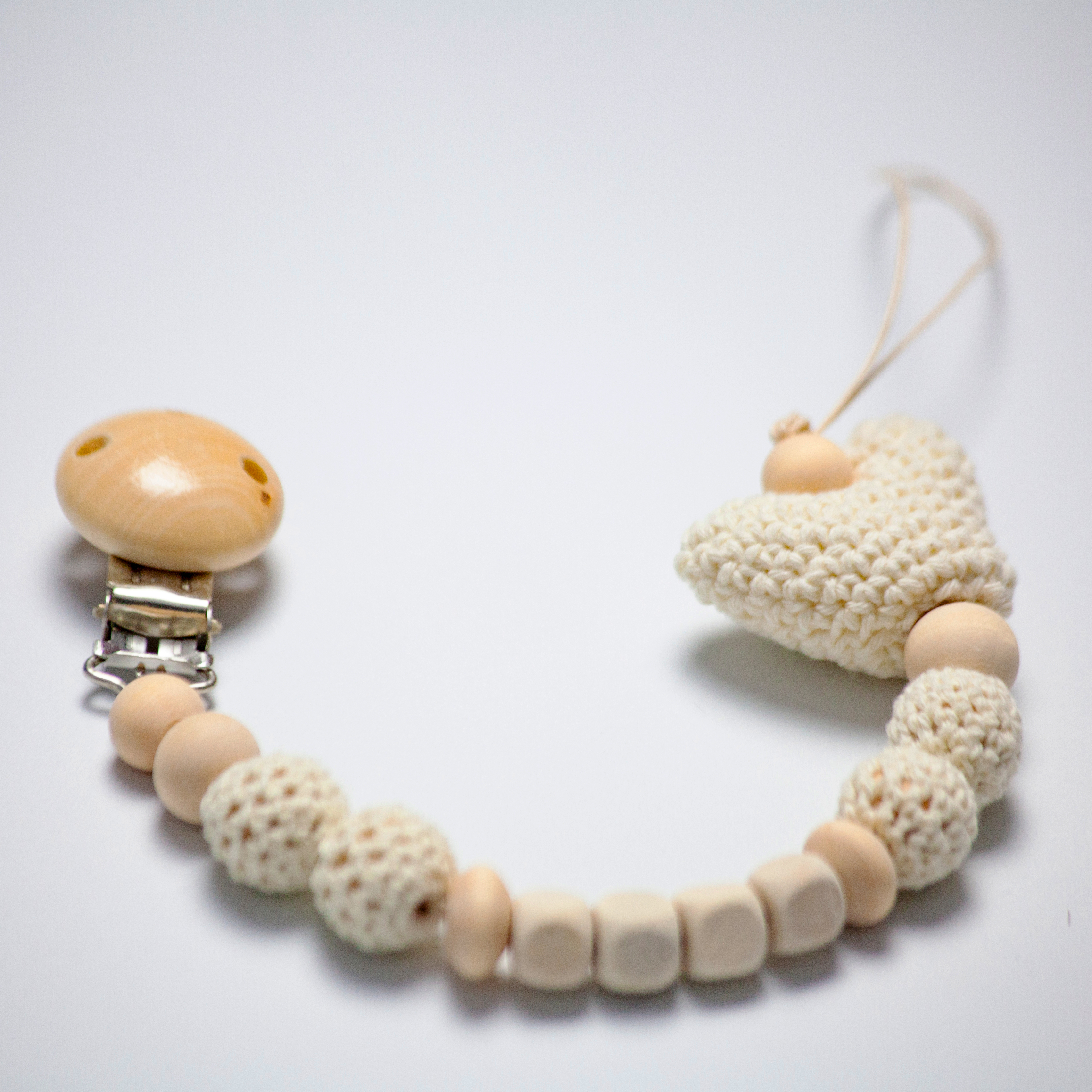
You give high importance to providing top quality products and using ethically sourced materials. How and where do you source the products? Do you also design and manufacture your own products?
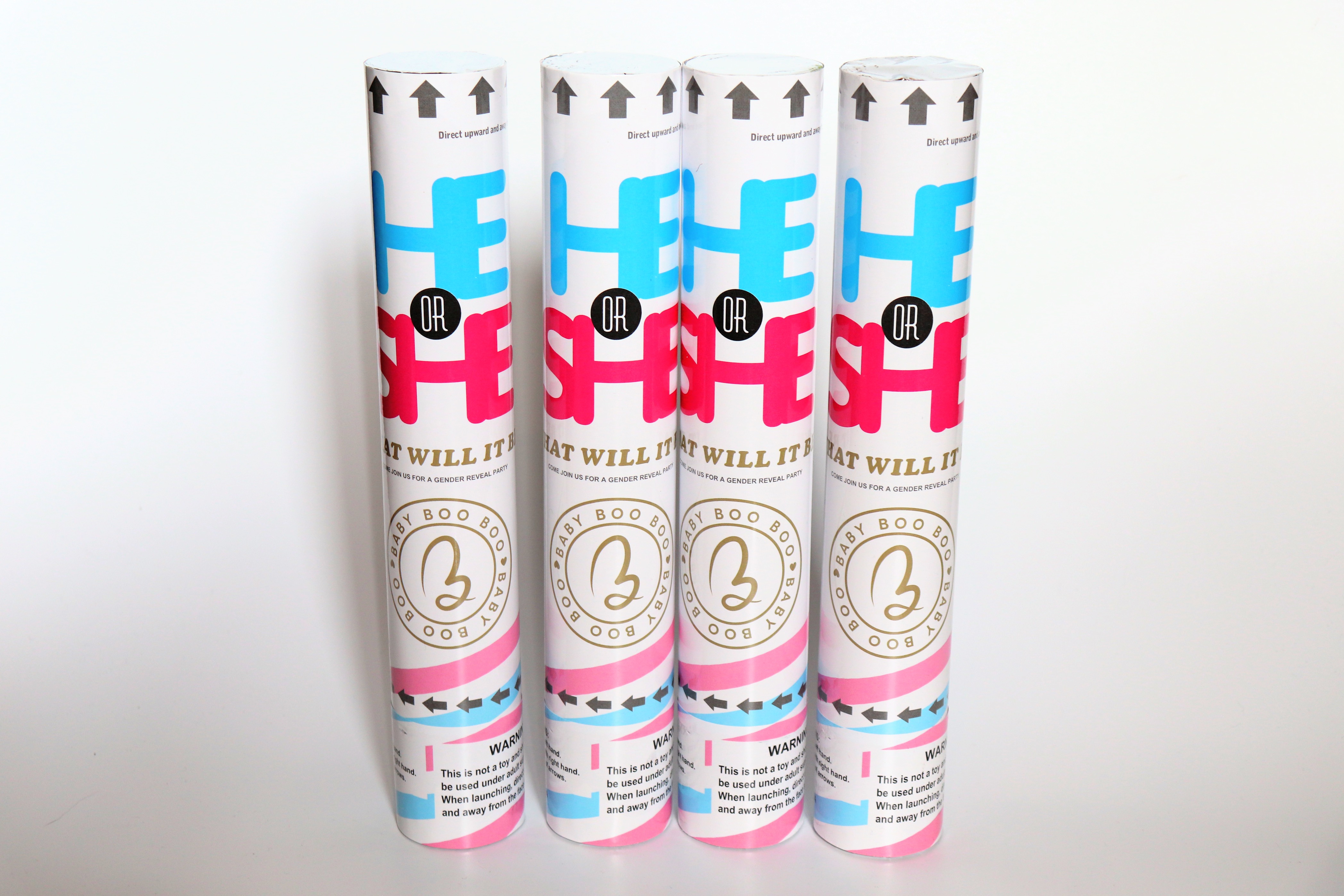
We have a mixture of sourced products from across Europe, Asia as well as home (UK) designed products such as our BB Classic, one of our first conceptualised baby grows. The BB Classic was the first product to allow us to understand the manufacturing process from start to finish. It also allowed us to get to grips with establishing our designs and developing an acute eye for detail. We custom design our Gender Reveal Cannons which was another exciting project to work on.
Currently we are designing and creating tech packs for our first full range and choosing a sole manufacturer for our designs. Our goal is to have most of our manufacturing processes led by one provider so that we can keep the high quality of our products. We do a lot of research when it comes to the materials of our products and enjoy the opportunity to incorporate organic cotton products into our brand.
Tell us more about the Conscious Parenting Network. Did you both come up with the idea? What’s the aim?
(Rabi). We always knew we wanted to have a blog incorporated into our website but a brainwave gave me the idea of The Conscious Parenting Network. As a young millennial, I was constantly aware and reminded by friends and family that the time would come when I would have children. Also, with the passing of my Mother I was very conscious that when I have children I won’t have that source of advice and the CP Network was a great opportunity to create that for those in similar positions.
The times we currently live in are very different from the times that we grew up in. We are living in a new era of parenting where there are now initiatives such as shared parental leave; more women are working in senior positions and/or running businesses as well as starting families. More men are allies creating a society where Gender Equality is a priority and an understanding of harmful gender stereotypes. With all of this, it made me think of not only creating a blog but a network of progressive millennial parents where pertinent discussions can take place on a globalised platform.
With the idea that ‘it takes a village to raise a child’, we would love the CP Network to branch off into small events taking place across London with parents and expert/speaker engaging on broad issues such as, how to make the most of maternity and paternity leave; returning to work and mental health and parenthood to name a few. We would love the CP Network to be a space that men can engage and share their stories of fatherhood.
You are both busy, young professionals. What is the story behind your partnership? How do you juggle all your commitments and run an online retailing business?
(Melissa). We’re both pretty much on the ball at all times. It can be hard working full-time and running an online business but we just make it work. It’s a lot of late nights and responding to emails during our commutes to and from work, or working on things during lunch breaks but we always make sure everything that needs to get done gets done!
(Rabi). We have been friends since the age of 11. We are now both 27 so we know each other and how we work best together including where our strengths and weaknesses lie. This is an important aspect of our partnership as it means we have a clear idea of who should do what and with our varying career backgrounds, we both bring something different to the table. When one of us might have too much going on, the other is always there to support and pick up extra responsibilities. We have both, during our business journey, gone through two serious bereavements. Having the other as a support continuing to work on the business has carried us through to our eventual launch.
In the years, you have been trading, what has been the most valuable thing you have learnt?
(Melissa). Don’t panic as everything is a learning process. We’ve have had quite a few tough challenges in the lead up to launching Baby Boo Boo. Every time it has caught us off guard, my initial reaction would always be, ‘why is this happening? My mind automatically running around like a headless chicken. But once the initial panic settled, we handled the crisis. After that happened a few times, I realised there will be plenty more challenges providing opportunities for growth and resilience.
(Rabi). For me, the two most valuable things is that there is nothing to fear from slow growth. Prior to launch we worried about not having a large range like some of the big companies. Essentially we started small. Secondly, I have learnt to overcome the fear of a large vision by breaking down activities and actions into smaller achievable tasks. This time two years ago I was worried about how we would continue to self-fund the development of our business and now we have a brand to be proud of.
Define your image of success for your online business and are you on track to achieving it?
Our image of success for Baby Boo Boo is to become a well-known UK national brand with a strong customer base and wide ranging engagement from parents of all backgrounds and cultures. When we diversify our products and create rolling collections, is when we will have reached our stride and achieved business success. Being a relatively new start-up, we believe we have the right mind-set and processes in place to make this a reality.
For more about Baby Boo Boo visit : www.babybbco.co.uk
]]>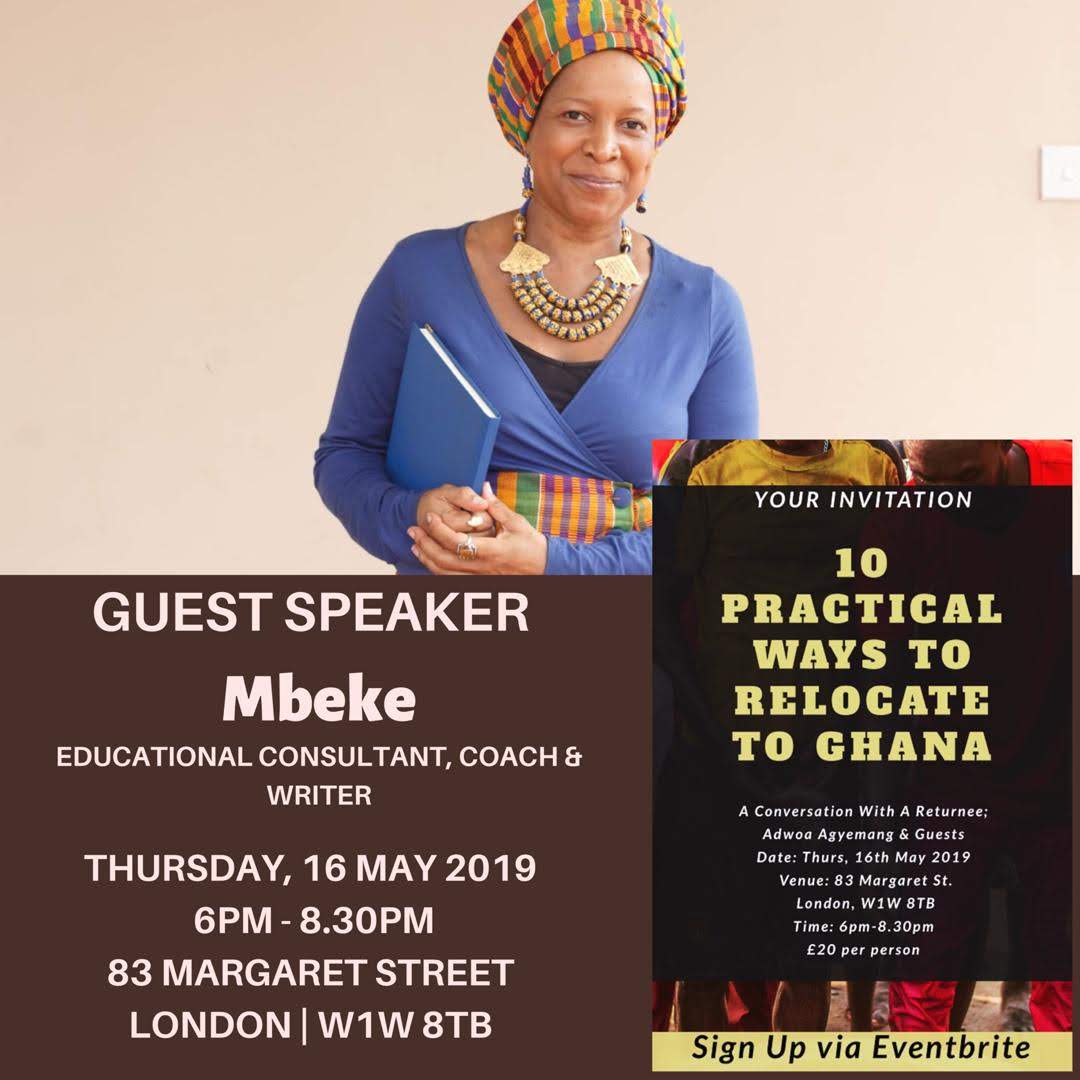
From as early as eleven years old, Mbeke Waseme was drawn to a world of self-discovery after her experiences of education both positive and negative forced her to start contemplating the big questions in life. While attending secondary school in south London during the seventies, it was the advice of her English teacher to take up reading books by Black writers that opened her world to a new sense of affirmation and acceptance.
From then on Mbeke, no longer needed to internalise the damaging words of another school teacher who accused her of copying the words of her own poem from another author. “Give me the book where you copied that from,” were the exact reproachful words of the teacher who had already confessed to never having taught in a school with so many ‘coloured’ people. Not only did Mbeke have to suffer detention but the deeply demoralising and experience of not being believed. See article (1) below
This is, of course, a common story for many black students in education up and down the UK. Yet the new world opened up by writers ; Maya Angelou, Alice Walker, Ntozake Shange, Toni Morrison, James Baldwin, Jean Binta Breeze, and Zora Neale Hurston meant that Mbeke could free herself from the mental slavery of self-doubt and low expectation to discover a new sense of identity and self-expression.

Fast forward to the eighties and Mbeke Waseme has joined a drama and song writing group examining the stories of women from the Windrush generation culminating in a production called Motherland, while still a student at school. This is followed by the publication of her first poetry book at the age of twenty two entitled Exploring All of Me.
Her sense of wanderlust soon takes over and Mbeke spends the next twenty years, on and off, working in Ghana, Jamaica, Dubai, Malaysia; her first port of call being the Cameroons in West Africa. Mbeke arrived specifically to carry out a voluntary programme distributing eye glasses to people who were suffering from water blindness.
“It was overall a positive experience,’ she recounts, ‘I remember travelling into the interior and seeing things like coffee beans drying in the sun and the gratitude of the people in villages when we distributed the glasses.’
Mbeke encountered new challenges like sacrificing her vegan lifestyle for the practice of eating fish in order to fit into the community. She killed chickens with her own bare hands or found porcupine on the evening menu. Other cultural differences that sparked her curiosity was the practice of polygamy. Mbeke spent much time deliberating with women in the communities. She learned first-hand how multiple wives handled the different circumstances they found themselves in. ‘The newest wife always got the preferential treatment,’ the women cried.
Back in the UK, Mbeke Waseme , whose first name is taken from the Ibo meaning, ‘born on Sunday’ and whose second name from the KiSwahili meaning ‘let them talk’ continued to expand her professional horizons by qualifying as a secondary school teacher, counsellor, yoga instructor, health expert and leadership and educational consultant. This is all while bringing up her young family in London. Her qualifications have been put to good use in her next posting as a teacher Inspector in Dubai and then in several placements as an educational consultant improving school curricula and teacher training programmes in Ghana and Malaysia.
‘These were amazing experiences that pushed me out of my comfort zone,’ says Mbeke. Using every opportunity to push frontiers and to understand the culture and polemical issues of the country, Mbeke gained insights into the societies she was working in that went far deeper than the usual expat surface encounters. In Malaysia she learnt about the endemic skin bleaching and colourism problem by people who deemed lighter skin colour to be a higher standard of beauty. She saw how the indigenous original people, the Orang Asli, experienced ongoing overt discrimination.
The years spent travelling, journeying into different cultures provided excellent fodder for her publications including an anthology of poems and many published essays.
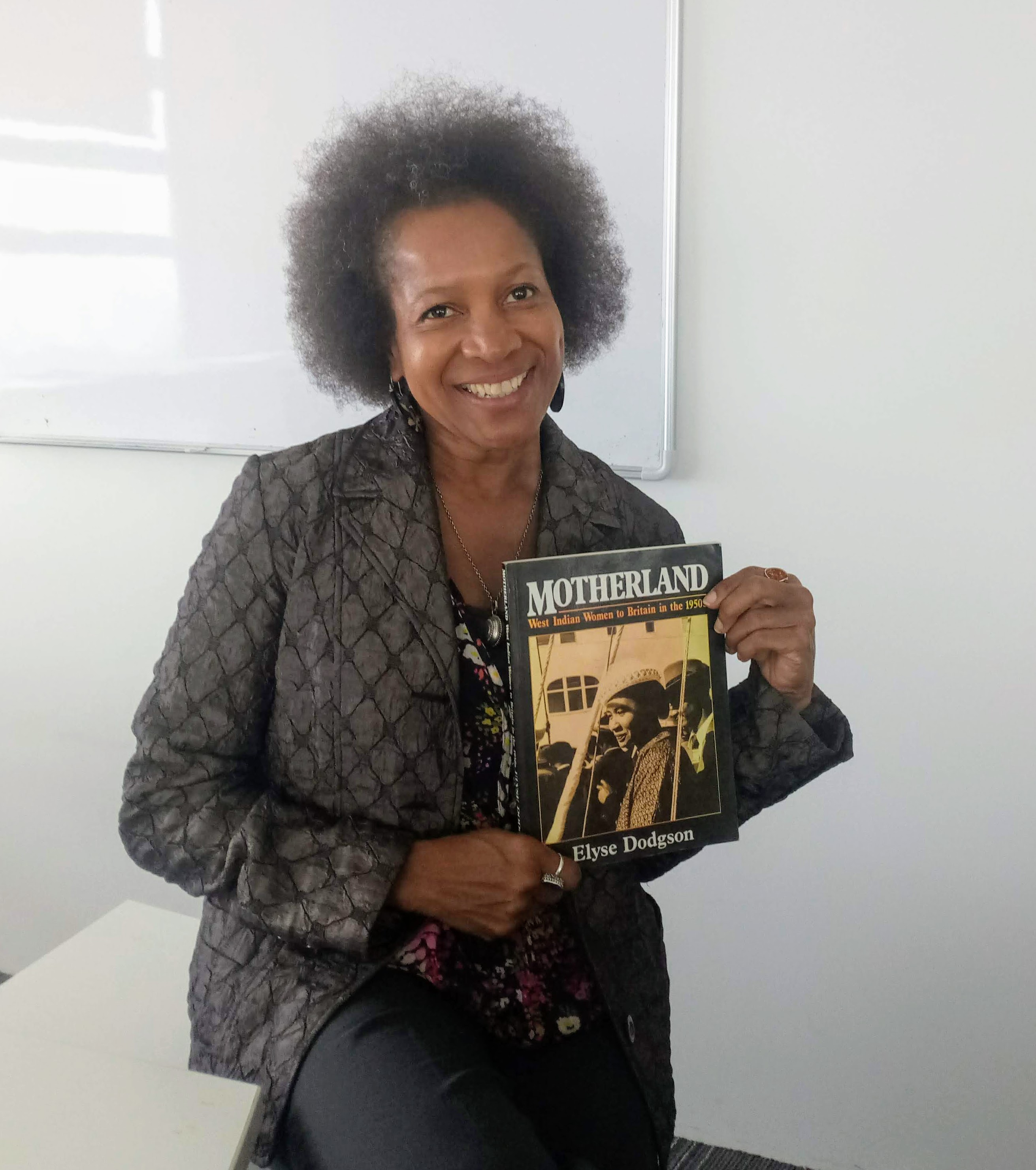
Fast forward again to 2019. Mbeke sits in a café in Kent, in South East of UK, reflecting on her very full life. The realisation has occurred that she has come full circle and wishes to pass on the wisdom gained from a life without confines onto the next generation of women trailblazers like herself.
“What advice would I give to my younger self?” She contemplates. Surely the hurtful words of the narrow minded teacher who could not accept her words of poetry occupy her mind. It prompts her to revisit and republish her first book of poems, ‘Exploring All of Me’ with the question in mind. And yet as she contemplates, it is the richness of a life lived to the max that offers the best answer. Spoken in her own words, she proclaims,’ I AM ENOUGH’.
Mbeke is a Writer, International Educational Consultant, Coach, and Trainer. She has lived and worked in Cameroon, Ghana, Jamaica, the UK, and Malaysia. She has a body of articles that have appeared in Black Business and Culture Magazine, Pambazuka, the Alarm Magazine and 72M Magazines. She now contributes to Diversity Business and Turning Point Magazine. Mbeke is available for coaching, speaking and writing engagements.
See also other articles by Mbeke Waseme:
(1)https://www.fifthestate.org/archive/402-winter-2019/stories-of-education-in-the-uk/
(2) http://bit.ly/HowToWorkLive
Read the review of Black History Boat Tour : https://diversitybusinesspromotes.uk/black-history-on-a-boat-cruise/
]]>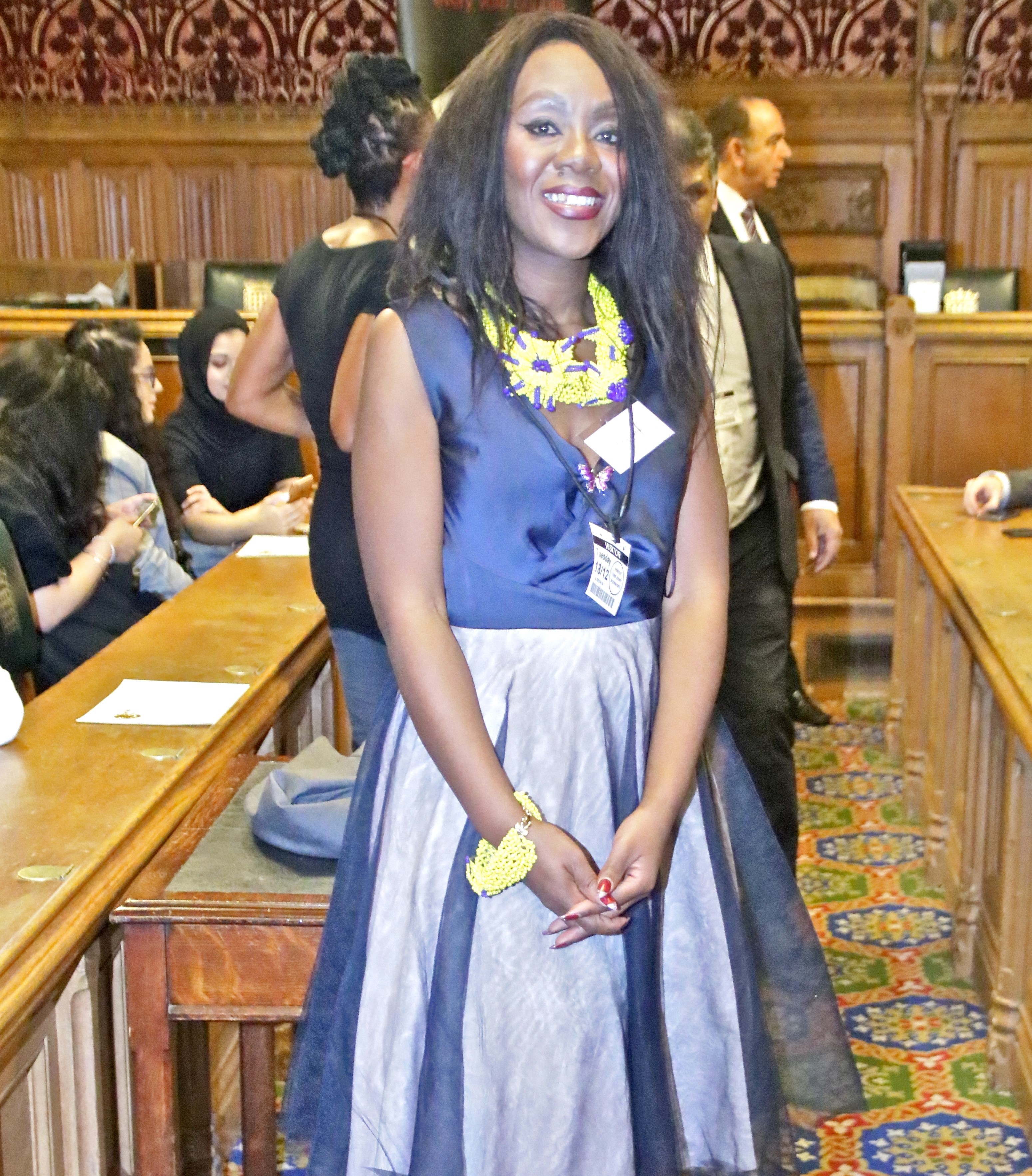
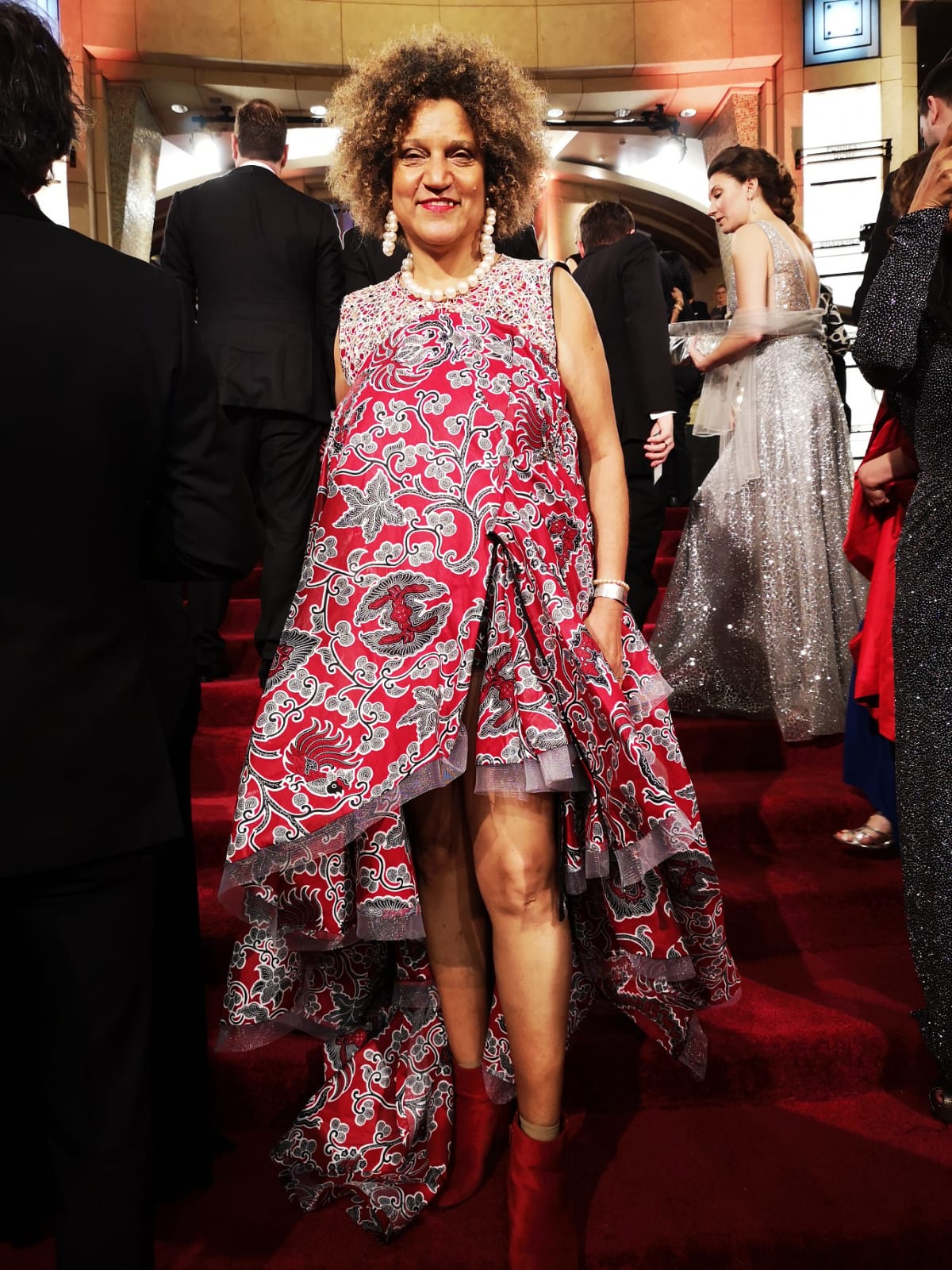
Mercy Francis (pictured above) discovered her talent for connecting people while looking for a means to pay the bills at home. With five children and growing businesses and responsibilities everywhere, Mercy shows how she has not been held back by her circumstances. Rather she has used them to achieve her goals and come out on top. In this interview for International Women’s Day, Mercy connects the dots from motherhood to international recognition.
Congratulations on becoming the Ambassador for the Christcast.world streaming platform. On the launch of its new video box device, can you tell us about the website and how the new gadget will transform the way audiences receive the content?
ChristCast is the first OTT (over the top, streaming over internet and also video-on-demand) platform that stores, shares and distributes Christian content globally. Christian organisations, missions, churches and ministries can store unlimited content on Christcast and at the same time, share their content with the world.
The difference between Christcast and other sharing and streaming platforms, is that Christcast will never mix Christian content with secular content. Families are safe to use Christcast without fear of negative content. Christcast is dedicated wholeheartedly to unifying, storing and distributing Christian content to the world by using online and offline state of the art technologies, which are easily accessible and ubiquitous. Christcast is accessible on over 1000 devices including iOS devices, Android devices, MACs, PCs, streaming media boxes such as Roku, Apple TV, Chromecast, and Nexus Player.
Who stands to benefit from the new technology? What makes Christcast unique from other streaming sites?
The way people watch TV is changing. Nowadays, viewers like to choose what they watch and at what time they watch it. Christian content is lagging behind other distribution methods because it relies too much on linear TV for broadcasting. This is geographically restricting.
Christcast distributes content using online and offline streaming. It has also introduced a device called Videobox. A mobile TV that does not require the internet to stream content. It has the capacity to store and stream up to 2TB videos, ebooks and music content. Christcast uses this wonderful device to take the gospel to areas of the world that have limited or no access to internet.
What is the estimated reach/viewership of Christcast?
Christcast’s reach is global. So estimated viewership is in billions.
You are yourself an entrepreneur, having started several businesses in your time? You run your own PR business. Can you tell us about your back story? How you came to be appointed Ambassador to one of the biggest international digital companies?
Mercy’s Media and PR Management is the name of my company. Our main aim is to help businesses grow. A lot of businesses lack the know how to promote their own businesses and branding. Amongst my clients are Fashion4Africa.
I started in business when my son was still a toddler. I was a stay at home Mum and I wasn’t one for sitting watching TV soaps. I had done that and got it out of my system. I am a very ambitious person. At first, I did voluntary work for friends and family but then something clicked. I was like a broker for people, connecting people and I could actually charge for the services I was rendering. I wanted the best for my kids and knew I needed money to do this.
This is how I started importing sculptures with a company I called Art Connoisseur. Its main purpose was to support artists in the developing world by bringing various works and showcasing it to suppliers here in the UK. I mainly dealt with Zimbabwe but due to the deteriorating situation in Zimbabwe, the business dwindled.
I then started a cleaning company. This time it was a do a die situation. By this I mean we had just moved, bought a house and I needed to pay bills. Sometimes you do not know what you are capable of until your back is pushed against a wall.
As mothers, having children we end up discovering our inner strengths and talents. I wanted to be a stay at home mum. As did my own mother. I saw the benefits of how it created a happy and healthy environment for the children. I would not say it’s for everyone but for me, it was the right path.
However, I was not prepared for the phenomenal gap in the market for cleaners which pushed the business to grow very fast within a short space of time. Because of the success, people would come to me for help to market their businesses.
The success spilled over into my family life with my kids obtaining full scholarships at some of UK top independent schools. The reason why I was asked to become an Ambassador for one of the biggest digital companies is because firstly, the founder was my former boss. He had discussed something similar, tried and tested me and saw I was hardworking and able to get the job done fast.
Secondly, my background is in Media. Last year I graduated in Media Culture and Communication. A lot of people fail to understand how the power of media, especially today’s digital media can help grow or destroy their business. It’s about building a brand! If you have a business and only your close circle of friends and family know about it, it will drain your resources. We want our clients to grow and be known as international leading brands.
How would you define success?
Success is setting a goal and achieving it. For some people it’s crossing a bridge for others, it’s climbing Mount Everest. The goals I set for myself were to obtain a master’s degree, to enter politics, to have a media company and for my kids to do well in whatever field they chose.
I can say so far so good. Last year, I completed my Master’s degree and also a one year MP shadowing Scheme. I am now the political Chairman of my local area and executive committee member of the finance and general purpose committee. As mentioned earlier, my kids are musicians and thriving in whatever they do including playing at Buckingham and Kensington Palace and singing for the Royal Family. My eldest just produced his first album last month.
I am in the process of becoming an MP and part of the Women’s Forum. I am also the Chairman of a local Charity.
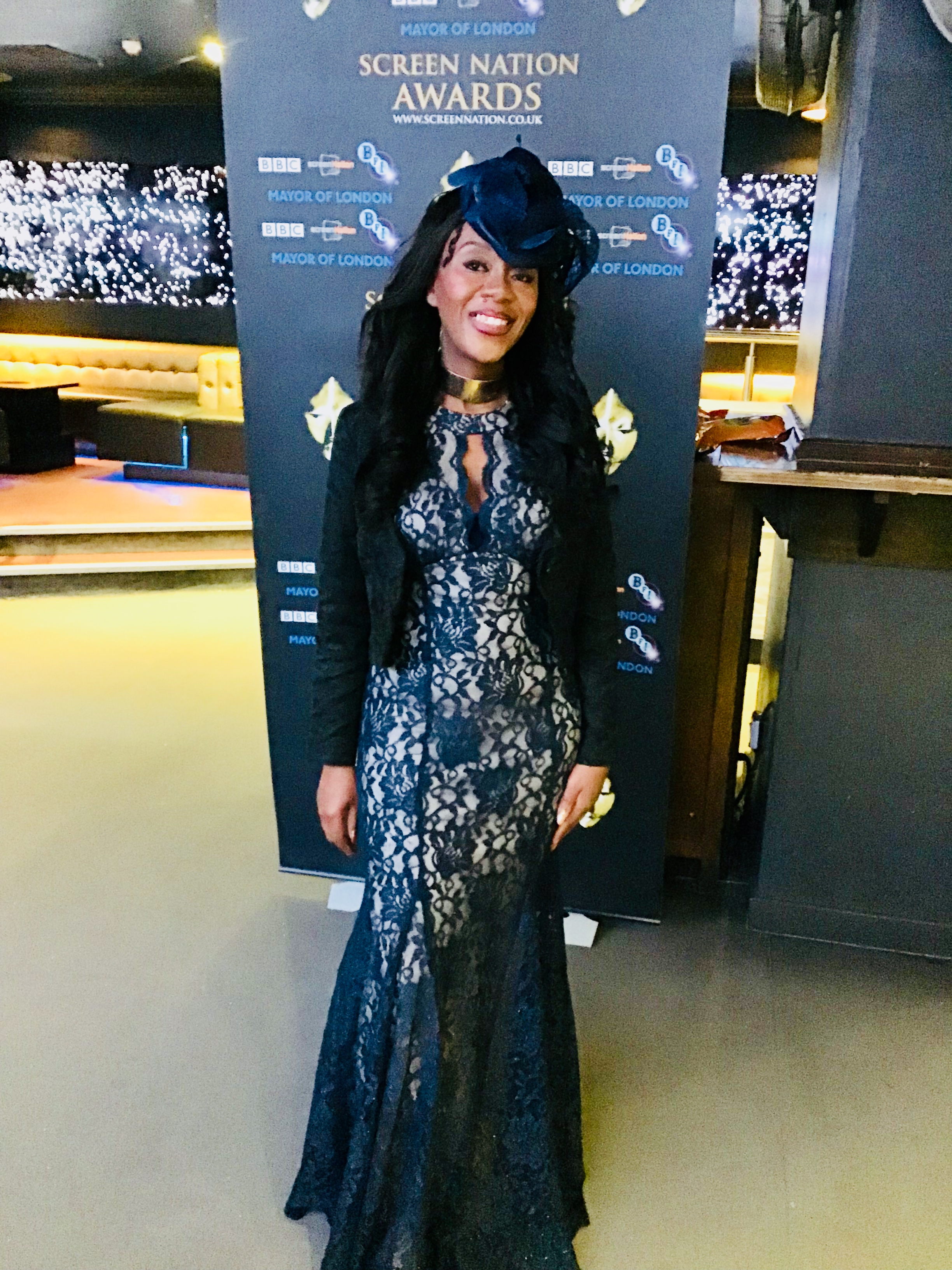
With so much going on, how do you achieve balance?
Having a big family means everyone chips in. The older ones help with the younger ones and chores are allocated down to the youngest. I feel it’s important to have discipline from an early age. This actually helps in preparing the kids for the future. Giving children responsibility from the onset helps to develop character and prepare them for the big world outside.
I try to respond to emails and texts on the go so as not have a backlog. Most of my work is done during school hours after the kids have gone to bed.
On International Women’s Day, what is your message of encouragement to women around the world?
My advice to women everywhere is never allow your gender to define your destiny! Women everywhere need to know that, in this current time and season, we make the world go round! With role models like Michelle Obama who comes from humble beginnings; to Oprah, an abuse victim; to Maya Angelou, who tells it perfectly in her poem “Still I Rise”. These are the many role models of womanhood. We pass through so much but we still come up on top winning!
For more info contact:[email protected]
Tel: 07376368505
]]>
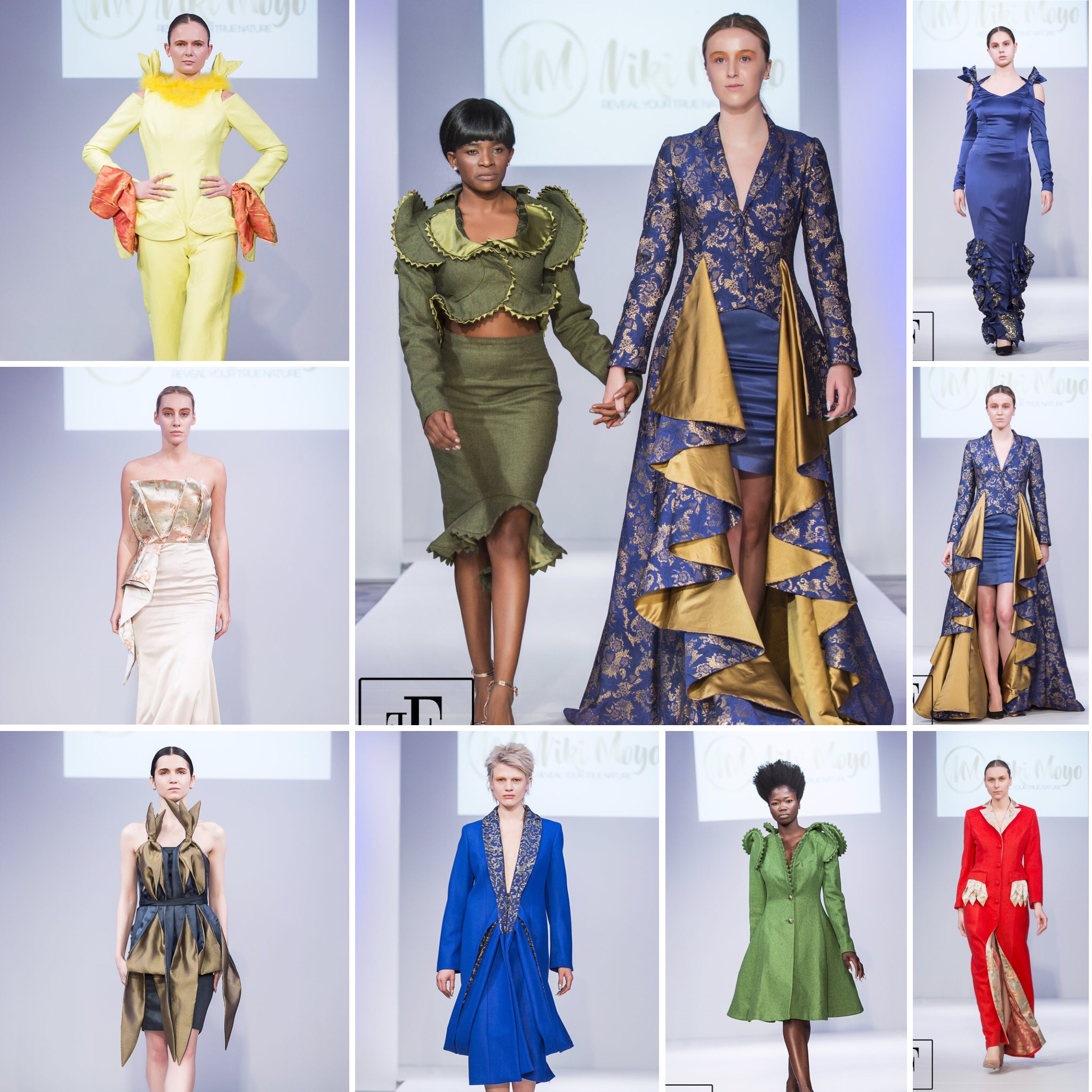
Sinikiwe Moyo (centre) always knew she wanted work in fashion. From crafting her doll’s outfits as a child back in her native Zimbabwe to launching her own label – Niki Moyo in London; Sinikiwe has always chased her dream and remained true to her vision. In this interview on International Women’s Day, Sinikiwe reflects on her journey and encourages women around the world to stay true to their style and project their inner beauty.
Congratulations for participating at the recently held London Fashion Week. I believe this is your second time after launching your first collection last year. Tell us what it was like and more about the designs.
It was such an immersive experience being around my fashion tribe. I felt so inspired and motivated watching the Autumn/Winter 19 Designer presentations, mingling and shopping from Designer Showrooms. I had great fun exploring the space filled with inspiring vibes and amazing experiences networking with some of the key fashion industry experts.
You are fast gathering a name as the next best thing in fashion. How would you describe your style?
Niki Moyo is a luxury couture brand that offers unique affordable timeless pieces designed to express femininity, showcase women’s individuality and command a room.
Where else have you exhibited? What has been your most exciting project to work on so far?
It all started with showcasing my graduate collection and winning the Fashion4Africa Designer of the Year 2017 Competition. The prize I won from Fashion4Africa was sponsored by Fashions Finest to showcase my Autumn/Winter 18 collection on their platform during London Fashion Week.
Fashions Finest UK, the second largest event for UK and International Designers during London Fashion Week has promoted and empowered underprivileged, emerging designers like myself by helping them breakthrough into the challenging and competitive UK fashion industry.
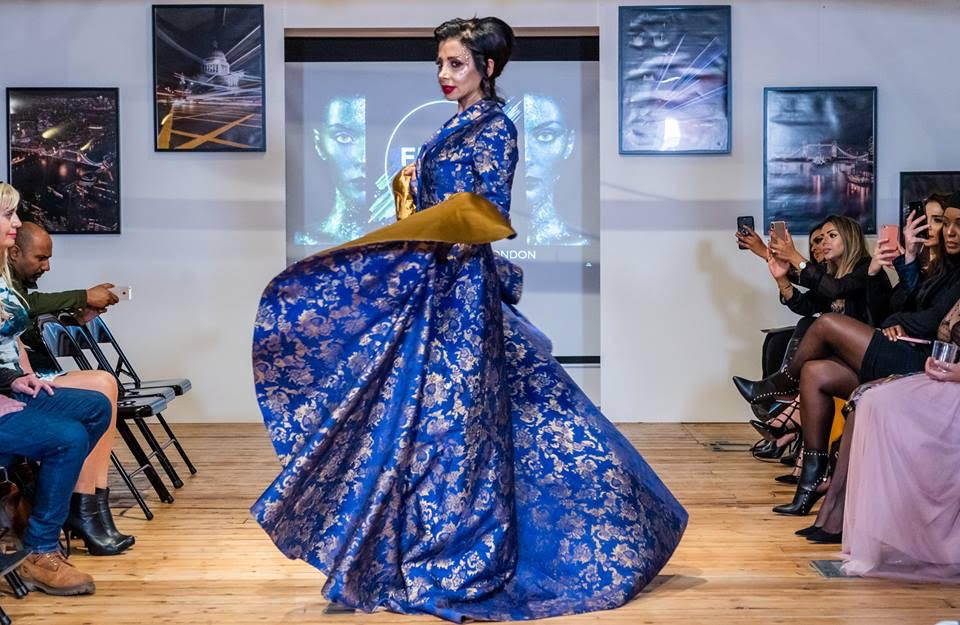
I have also showcased at Flame International Fashion and Art Festival 2018 where I won two sponsored prizes Best Pret-a-Porter Collection and Best Creative Collection, to showcase at Odessa Fashion Week and a feature in an International magazine.
The most exciting project I have worked on so far has been the amazing privilege to design and showcase my very first NIKI MOYO AUTUMN/WINTER 18 Bird Of Paradise Collection to a larger international platform At Fashions Finest during London Fashion Week.
Did you always know you wanted to be a fashion designer? How did you get started?
I initially showed a flair for fashion and design when helping to create new outfits for my dolls helped by my mother, who was a great lover and supporter of the regional Arts and Craft at the time.
As a teenager, making my own clothes was a natural progression and my design flair was confirmed when I raced ahead of other pupils at school when studying craft work and Fashion and Fabrics.
Deconstructing clothes to establish patterns and understand the various cuts for garments, swiftly confirmed a passion for fashion, heavily influenced by the culture of the region, combined with the exciting prospect of new global fashion trends.
This drive and motivation led me to initially securing a professional National Certificate in Clothing Technology. This led to a place at the Bulawayo Polytechnic School of Art & Design, where I graduated from a National Diploma in Fashion Design and authored my first formal “Portfolio”.
I went onto secure an internship at the respected Edgars Group, the regional clothing market leader, who supply quality adult and children’s merchandise across Zimbabwe. Fully leveraging the relationships built at Edgars, I was offered a permanent role with them, initially as a Fashion Designer, and gaining promotion to Product Coordinator on the back of the commercial success delivered for the brand and its sub-brands.
I took a decision to relocate to the UK to follow my dream of a global fashion career where I have studied for a UK based Fashion Degree. This has resulted in my real talent coming through, firstly when I achieved a 1st Class Degree in Fashion Design with Business, followed by winning multiple awards.

You are also the Fashion4Africa Ambassador. What does the role entail and what are the aims of the organisation?
Being Fashion4Africa Ambassador means I can advocate for the organisation, influence other designers, leverage relations and raise awareness of what the brand stands for considering my personal experience. I have seen the benefits of getting involved.
Fashion4Africa is an organisation that works with emerging Fashion Designers and aspiring Models of African origin, with a goal to train, mentor, support, share, and develop creative skills within the African Diaspora and talent in Africa. The winners gain business mentoring with industry experts. It is for graduates or non graduates identified as needing the support and development to enhance their creative ability and further their knowledge, skills and performance. This all prepares them to be ready and fit for business.
Who are your fashion icons?
Italian Designer Roberto Capucci for his artistic and extravagant signature. The legendary Coco Chanel for staying true to her values and not allowing her creativity to be dictated by Fashion trends. She was an innovator and trendsetter; The Little Black Dress and her classic signature jacket which still have a very strong influence years later. Kate Spade for building an empire of adorable handbags. Her accessories are a game changer: They are beautiful, playful, adorable. They are made to stand out, not to fit in. They are cheerful, bold, and fabulous in a way I haven’t known fashion could be.
Are there any particular celebrities for whom you would like to design?
The Duchess of Cambridge, Kate Middleton, Robyn Rihanna Fenty, Beyoncé, Naomi Campbell, Danai Gurira and Former First Lady Michelle Obama. I admire how their styles mirrors their personalities and create a harmonious, beautiful image of individuality. As a designer, it is important that I dress a woman according to her true nature. In other words, as a woman, you’re what you wear, a dress defines the true nature of a woman. Hence one of my favourite designers summed it up. “Look for the woman in the dress. If there is no woman, there is no dress.” Coco Chanel.
What are your plans for 2019?
I am working on a collection to be showcased During Spring/Summer 20 International Fashion Weeks that will help women tackle and balance the issues around the subjects of sustainability, diversity and inclusion for a better feeling in regards to women’s body image.
What is your message for women around the world on International Women’s Day?
As women, let us all play a critical role in helping to truly forge the agenda of creating a more balanced fashion world and make a better difference for women of the current and girls of the future as we all work together for a #BalanceForBetter campaign.
One of Niki Moyo’s ethos (REVEAL YOUR TRUE NATURE) is to encourage and dress women to bring out the true reflection of their inner and individual beauty. This is interpreted as, true beauty is on the inside. What’s underneath is your true style, a true reflection of your individuality. As a woman, proudly celebrate that beauty by wearing the best styles that reveal and showcase your unique and true nature. Keep true to yourself through your own personal style. Knowing your inner self makes you happy and confident in who you are as true style is self acceptance, knowing who you are and what makes you feel fulfilled.
For more about Niki Moyo contact: